
7 Things You Didn't Know Were at the Met: The Ultimate Insider Checklist (for a Met Museum Private Tour)

Updated: Feb 26

Here's the truth most people don't want to hear: You're probably doing the Met wrong.
Everyone rushes to the Egyptian Wing, snaps a photo at the Temple of Dendur, and calls it a day. Maybe they swing by the European paintings if there's time. But they're missing entire rooms, actual historical spaces transported brick-by-brick from across the world, that sit quietly waiting while tourists exhaust themselves in the crowded galleries.
I can tell you from years of running expert-led guided museum tours NYC visitors ask for when they want the “real” Met: the Met's best-kept secrets aren't secret because they're hidden. They're overlooked because nobody tells you where to look—or how to get there without doubling back three times.
That’s why a met museum private tour changes everything. With personal private tours (or group private tours for families and friends), you get a curator-level game plan: what to skip, what to prioritize, and how to actually find the rooms that most people never realize are here.
Let's fix that.
Met Museum Private Tour:
1. The Astor Chinese Garden Court: Your Indoor Zen Escape
Tucked away in the Asian Art galleries, this full-scale Ming Dynasty-style courtyard garden stops people in their tracks. And I mean literally, the shift from museum corridor to this serene space is jarring in the best way.
Built in the 1980s, the Astor Court recreates the aesthetic of a late Ming Dynasty scholar's garden from Suzhou. We're talking about intricate latticed windows, a reflecting pool, carefully placed rocks, and that distinctive upturned roof architecture. The acoustics change the moment you step inside. The museum noise fades. You hear water.
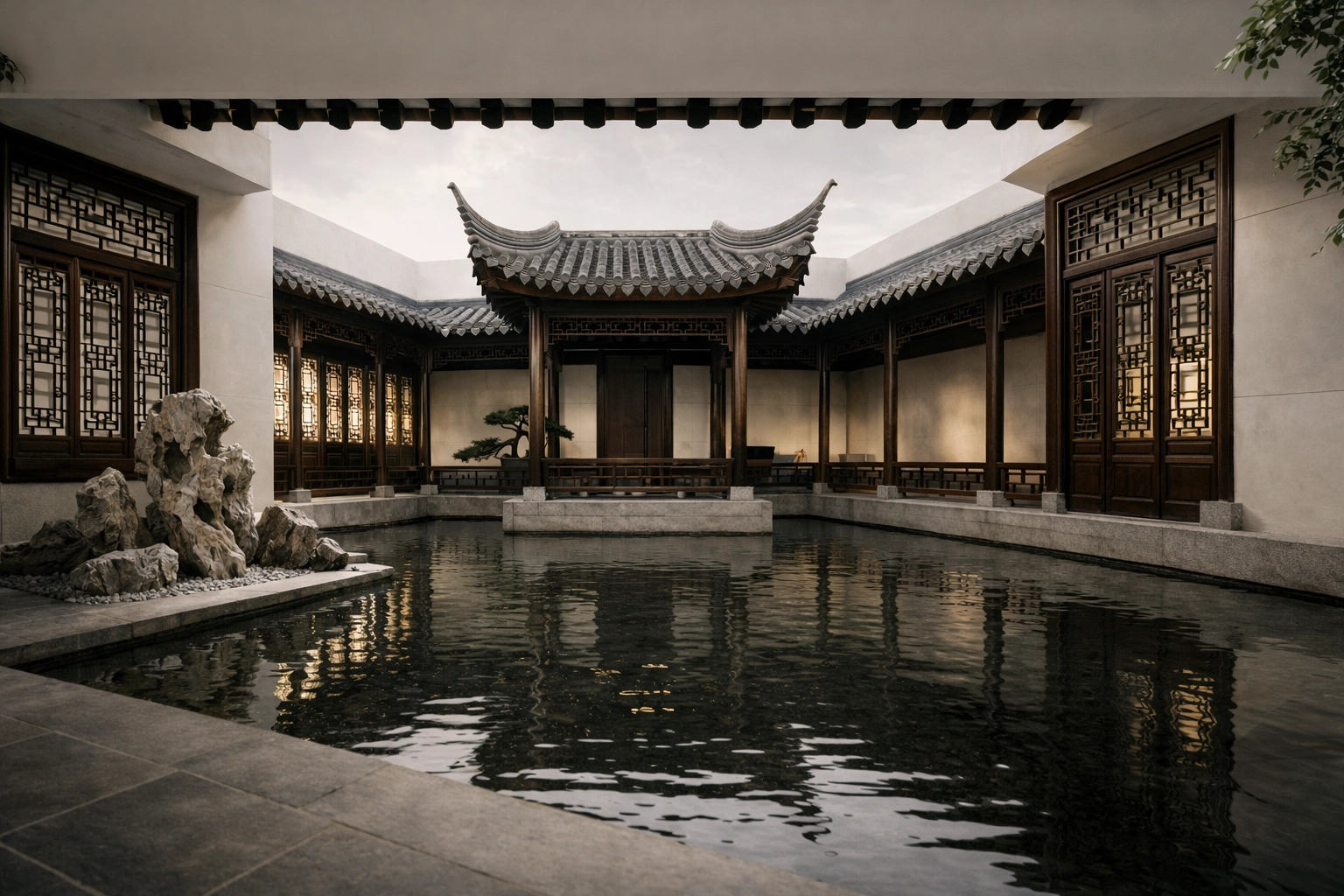
Most visitors blow right past it on their way to the Buddhist sculptures. Don't be most visitors.
Pro insider tip: Visit on a weekday morning or Fridays after 3 PM. You might have the entire courtyard to yourself, which feels impossibly luxurious in a museum that gets 7 million visitors a year.
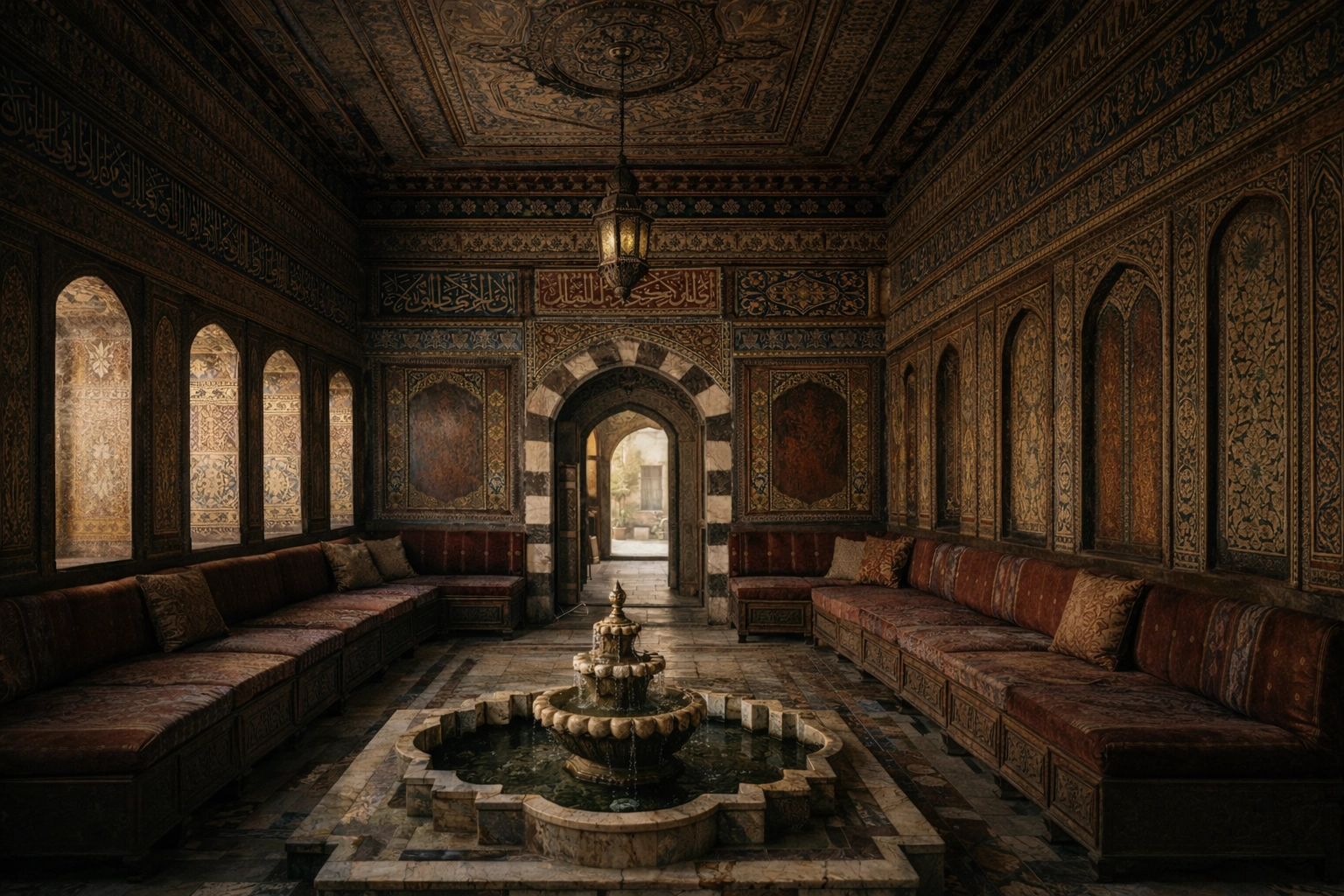
2. The Nur al-Din Room (Damascus Room): Step Into 18th-Century Damascus
This one always gets audible gasps on our private tours—and for good reason.
The Nur al-Din Room (often called the Damascus Room) is an actual reception room from an 18th-century merchant’s house in Damascus. Every inch of the walls and ceiling is covered in intricately painted wooden panels featuring Arabic calligraphy, geometric patterns, and scenes from Ottoman life. The colors—deep blues, reds, golds—are still vibrant after nearly 300 years.
And just to be crystal clear on where to find it: it’s in the Met’s Islamic Art galleries (Gallery 461), not the American Wing. It belongs to the Department of Islamic Art, and it’s one of those spaces that feels less like “a museum object” and more like stepping into a living room that just happens to be preserved at world-class level. The fountain. The built-in benches. The way light filters through the arched doorway.
This is exactly where private tours of the Metropolitan Museum of Art shine: an expert guide (often with museum/curatorial experience) can get you there efficiently, give the backstory that makes the details click, and help you notice what most people walk right past.
3. The Luce Center for American Art: Behind-the-Glass Wonderland
Ever wonder what happens to all the stuff museums can't fit in their galleries? The Luce Center has your answer, and it's spectacular. This visible storage area displays over 10,000 objects behind floor-to-ceiling glass cases. We're talking decorative arts, furniture, silver, ceramics, and folk art spanning three centuries of American history. It's organized by type and material rather than chronology, which creates these incredible visual moments where objects from different eras sit side by side.
The whole concept turns traditional museum display on its head. You see multiple examples of similar objects—twenty different silver teapots, a wall of duck decoys, an entire section of weathervanes. It's like browsing the Met's attic (if the Met's attic was beautifully curated and climate-controlled).
This is also where group private tours get really fun: everyone can “choose a lane” (silver! furniture! Tiffany!) while your expert guide keeps the story cohesive. And on personal private tours, we can slow down and go deep on exactly what you collect, love, or are curious about.
What makes it special: The density. In a regular gallery, you might see one exceptional Tiffany lamp. In the Luce Center, you see forty pieces of Tiffany glass and suddenly understand the evolution of the style. This floor is also known to be haunted.
4. The Gubbio Studiolo: A 15th-Century Puzzle Box
This tiny room is easy to miss, and that would be a genuine tragedy.
The Gubbio Studiolo is an intimate wood-paneled study from the palace of Federico da Montefeltro, Duke of Urbino, dating to somewhere between 1478-1482. But here's what makes it extraordinary: every surface is covered in intarsia, the Renaissance art of inlaid wood creating incredibly detailed images.
Look closer. Those aren't paintings. Those "shelves" of books, musical instruments, scientific tools, and even a half-open latticed cupboard revealing more objects inside, they're all created from different colored woods fitted together with mathematical precision. The three-dimensional illusion is so convincing that people reach out to touch it (please don't).

Federico commissioned this masterpiece as his private retreat: a space to think, read,
and surround himself with symbols of learning and culture. You can practically feel the intellectual ambition embedded in the wood.
5. The Lehman Wing Facade: The Met’s Original Red Brick Hiding in Plain Sight
Most people enter the Lehman Collection and focus on the art: understandably, since it includes works by Rembrandt, Botticelli, and El Greco. But turn around before you leave and look at the walls.
That exposed section of red brick? That’s part of the Met’s original 1880 building—an architectural “tell” that you’re standing inside a museum that has been expanding (and reinventing itself) for nearly 150 years. When the museum expanded and constructed the modern Lehman Wing in 1975, they deliberately left a section of the historic facade visible inside the new structure.
It’s a brilliant decision. You’re seeing layers of time compressed into one space: 1880s brick, 1970s modernist design, and centuries-old European art all coexisting.
This is one of my favorite moments on private tours of the Metropolitan Museum of Art because it’s the kind of detail a museum professional notices instinctively—and most visitors never get told to look up and clock it. Nobody tells you to look for it. Now you'll notice it every time.
6. The Vélez Blanco Patio: A Spanish Castle in Manhattan
Want to stand in the courtyard of a 16th-century Spanish Renaissance castle? Head to the first floor and find the Vélez Blanco Patio.
This two-story marble courtyard comes from the Castillo de Vélez Blanco in Almería, Spain. Built around 1506-1515, it features elaborate carved columns, ornate arcades, and decorative elements blending Gothic, Renaissance, and Mudéjar (Moorish-influenced Spanish) styles.
The scale hits you first. Then the details: the delicate carving on every surface, the way light plays across the stone, the sense of grandeur compressed into this unexpected pocket of European architecture.
Like many of the Met's period rooms, it was purchased when the original structure fell into disrepair, dismantled, and reconstructed here. Controversial? Maybe. But walking through it gives you a visceral understanding of Spanish Renaissance art and architecture that no painting could match.
7. The Worsham-Rockefeller Dressing Room: Gilded Age Opulence
This one's for everyone who's secretly watched The Gilded Age and wondered what those Fifth Avenue mansions really looked like inside.
The Worsham-Rockefeller Dressing Room comes from the mansion that once stood at 4 West 54th Street: demolished in 1964, but this spectacular room was saved. Dating to around 1881, it represents the height of American wealth and decorative excess.
The woodwork alone is mesmerizing: carved cherry wood, gilded highlights, built-in mirrors, and elaborate architectural details. The ceiling. The paneling. Even the doorway feels like a statement. This wasn't just a place to get dressed: it was a space designed to remind you (and anyone who glimpsed it) of your position in society's upper echelons.
It's tucked into the American Wing period rooms, often overlooked by visitors rushing toward the more famous furniture galleries. Their loss.

Why These Rooms Matter (Beyond the Cool Factor)
Here's what I love about these seven spaces: they're not just about history: they are history.
You're not looking at a painting of a Chinese garden or a photograph of a Syrian reception room. You're standing inside actual spaces where people lived, worked, studied, and socialized centuries ago. The Met has transported entire architectural environments across oceans and decades so you can experience them directly.
That's not something you get in many museums. And it's definitely not something most visitors realize is even here.
Ready to Actually See the Met?
Look, you can absolutely wander through on your own with this checklist. These rooms are open during regular museum hours (though it's worth checking the Met's website since some galleries occasionally close for rotation or conservation).
But here’s what I’d ask you to consider: how much more would you see—how much deeper would it feel—if your guide wasn’t just “a tour guide,” but an expert-led insider (the kind of museum staff/curatorial brain that knows what’s worth your time and how to navigate the building without wasting half your day)?
That’s the difference between a nice visit and a met museum private tour.
With our personal private tours for families and group private tours, we design your route around your interests, your pace, and your people—then we bring the context that makes the Met’s “wow” moments land. If you’re specifically searching for guided museum tours NYC travelers rave about (and yes, VIP entry/line-skipping when available), this is exactly what we do.
Ready to step behind the velvet rope? Book your Met experience here: Private Museum Tours and Arts Advisory — Metropolitan Museum of Art Private Tours.
The Met will still be crowded at the Temple of Dendur. These seven spots? You might have them mostly to yourself. And that, honestly, is how the Met is meant to be experienced.


Comments