
The Architect's Secret: Pierpont Morgan’s Hidden Staircase & The Library’s Best-Kept Mysteries
- Maria Yoon
- Feb 21
- 5 min read
Updated: Mar 14

Morgan Library Hidden Staircase
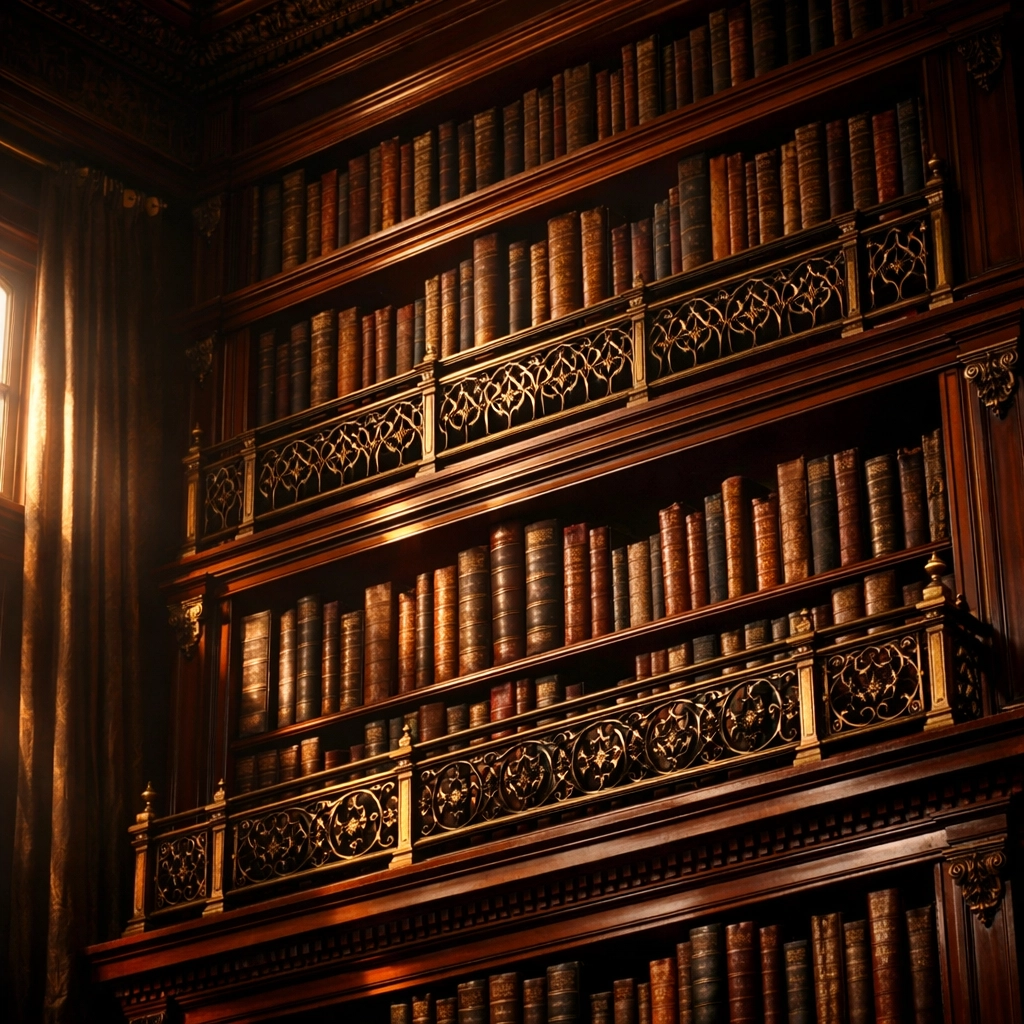
If you’ve ever stepped into the East Room of the Morgan Library in NYC, you’ve likely gazed up at the three tiers of towering bookshelves and asked the golden question: "How did the librarians actually reach the top?" While the official tour mentions the hidden spiral staircase tucked behind the ornate bronze grilles, there is a deeper, staff-level secret most visitors never learn. J.P. Morgan didn't just design his private sanctuary to project power; he designed it for invisible convenience. To maintain the library’s seamless aesthetic, Morgan and his architect, Charles McKim, had to "defeat" the staircase—turning a massive architectural necessity into a vanishing act. Here is the untold story of how the Morgan Library’s hidden passageways were engineered to make a titan’s life feel entirely effortless.
The Titan Who Hated Stairs
J.P. Morgan wasn't just building a library. He was building a monument to seamless power. And by the early 1900s, he had two problems that didn't fit the image: a chronic skin condition (rosacea) that made him self-conscious, and a growing distaste for the physical exertion of climbing stairs.
Picture this: You're one of the most powerful financiers in American history. You've just orchestrated a deal that saved the U.S. economy. The last thing you want is to arrive at your private vault panting.
So Morgan did what any titan would do: he threw money at the problem. Enter Charles McKim, the architect tasked with making Morgan's library a place where gravity, and inconvenience, simply didn't exist.
The Pivot That Changed Everything
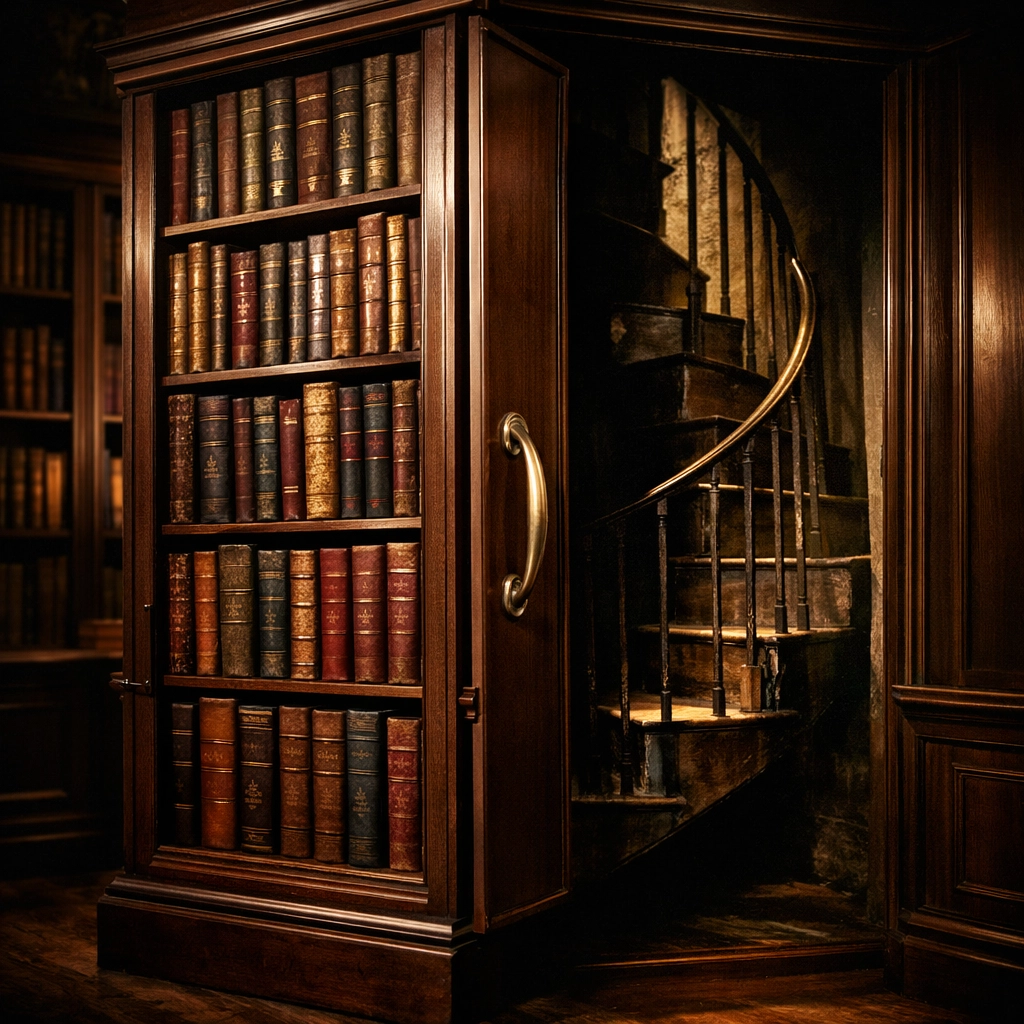
McKim's solution was pure genius. He couldn't just install a grand staircase, that would disrupt the refined, classical aesthetic Morgan demanded. So instead, he hid the staircases inside the bookcases themselves.
On the ground floor, select mahogany bookcases near the entrance doors feature discreet brass handles. Pull one, and the entire bookcase pivots smoothly on hidden hinges, revealing a spiral staircase behind it. These aren't just decorative, they're the working staircases that librarians and curators use today when retrieving rare manuscripts from the upper tiers.
It's the kind of detail that makes you feel like you've stumbled into a Victorian-era detective novel. Except this was real. And it was just the beginning.
The Elevator No One Talks About
Here's where the story gets really good. Most visitors assume the elevator at the Morgan Library is a modern accessibility feature. It's not.
Morgan's original library featured a secret, wood-paneled Otis elevator hidden behind what looked like an ordinary library closet. This was one of the first private elevators installed in a residence-style building in New York City, and it allowed Pierpont to glide silently from his study to his vault, and back, without ever breaking a sweat.
Think about that for a moment. While the rest of New York was still getting used to the subway, Morgan had a private elevator ferrying him between his treasures. The man literally elevated "above it all."
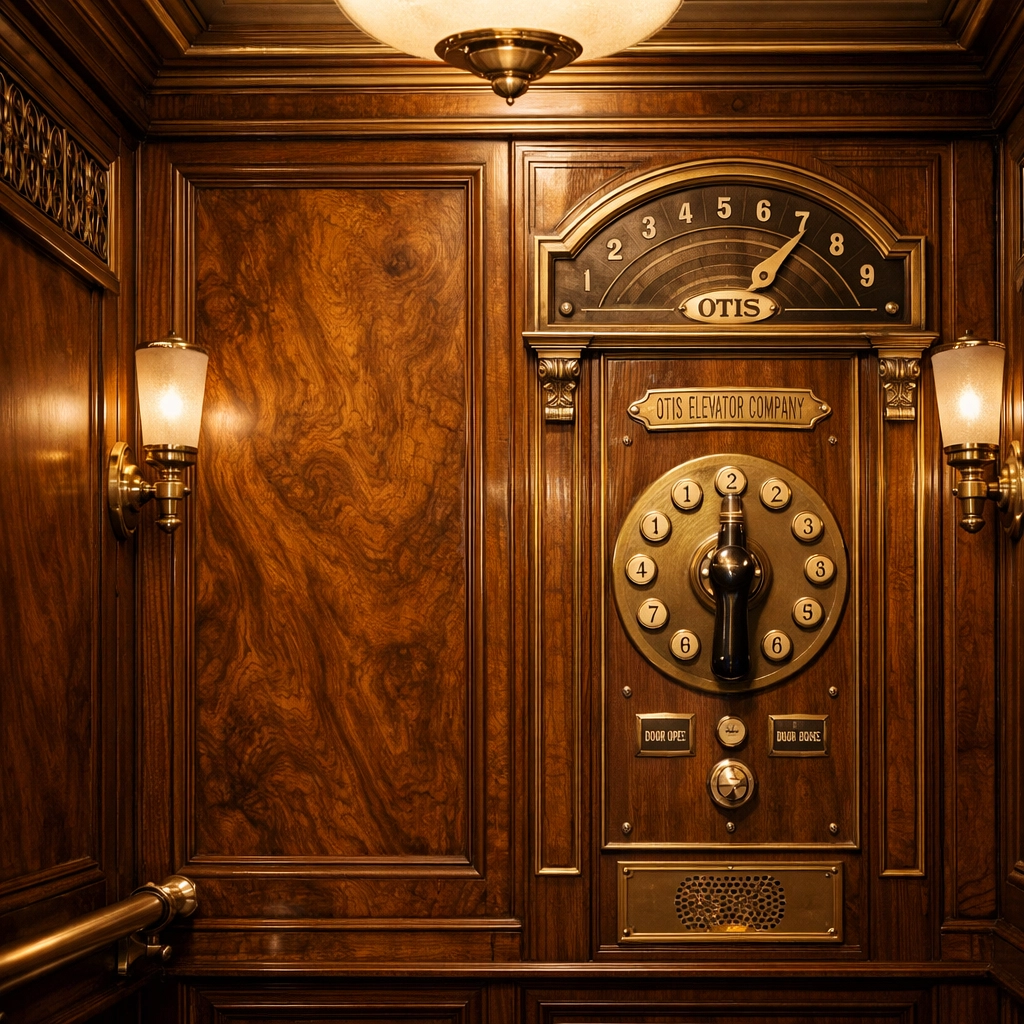
The elevator was carefully paneled in the same Circassian walnut as the rest of the study, making it nearly invisible to guests. You'd walk past it a dozen times and never know it was there. That's the Morgan way: power that doesn't announce itself.
If Charles McKim Had Total Creative Freedom
This is where we get into the fun part. McKim was under immense pressure. Morgan was a client who didn't like to wait, and he certainly didn't like to be uncomfortable. But what if McKim had thrown caution (and budget) entirely out the window?
Here are three architectural fantasies that almost could have been:
The "Book-Slide" Chute
Why wait for a librarian to carefully carry a Gutenberg Bible down a ladder? McKim could have installed a velvet-lined pneumatic tube system, similar to the ones banks used to whoosh cash between floors, to transport rare manuscripts directly from the upper tiers to Morgan's desk.
Imagine: You're sitting in the study, you want to reference a medieval manuscript, you pull a lever, and whoosh, there it is, delivered via cushioned tube in seconds. Pure McKim magic.
The Rotating Vault Wall
Picture this: The mahogany bookcases in Morgan's study sit on a silent, hydraulic pivot. Push a specific leather-bound book (let's say, a copy of The Prince), and the entire wall rotates 180 degrees, revealing a secret passage that leads directly to Morgan's private carriage outside.
No stairs. No public eyes. Just pure, seamless disappearance. Morgan enters the library through the front door like a gentleman, then exits through the bookcase like a magician.
The Floor-Level Lift
Forget elevator cars. McKim could have turned Morgan's entire Persian rug into a discreet lift platform. Morgan stands on the rug, a servant pulls a lever in the basement, and Pierpont slowly rises to the second gallery like a ghost ascending through his own castle.
It's absurd. It's over-the-top. And knowing Morgan's taste for theatrical power moves? He probably would have loved it.
Why This Matters for Your NYC Museum Tours
Here's the thing about the Morgan Library that most private museum tours in NYC won't tell you: the architecture is the exhibit.
Yes, the manuscripts are priceless. Yes, the Gutenberg Bible is stunning. But the real treasure is understanding how Morgan engineered his entire environment to reflect his philosophy: that true power is invisible, seamless, and doesn't ask permission.
When you visit with someone who knows these secrets, the pivoting bookcases, the hidden elevator, the reason Morgan built his vault with triple-locked bronze doors, you're not just seeing a library. You're stepping inside the mind of a man who believed physical space should bend to your will, not the other way around.
The Takeaway: What Morgan Knew About Luxury
Morgan understood something that most museum-goers miss: luxury isn't about being seen. It's about removing friction.
The elevator wasn't installed so guests would marvel at it. It was installed so Morgan never had to think about stairs again. The pivoting bookcases weren't meant to impress visitors (most never even noticed them). They were meant to keep the library's aesthetic unbroken while solving a practical problem.
That's the difference between wealth and power. Wealth shows off. Power disappears into the woodwork, literally.
Your Insider Access to the Morgan Library
If you're planning private museum tours in NYC, the Morgan Library should be at the top of your list. But don't just walk through it like another tourist attraction. Book a guide who knows where to look, which books to lean into, and how to spot the brass handles that reveal McKim's hidden genius.
Because here's the truth: You can visit the Morgan Library a hundred times and never see the elevator. You can admire the East Room and never realize those bookcases move.
Or you can go once, with someone who knows the architect's secrets, and see the whole building differently.
That's not just a tour. That's the Morgan Library secrets only insiders get to experience. And trust me, once you've watched a bookcase pivot open to reveal a spiral staircase? You'll never look at a library the same way again.
Ready to step inside the architect's mind? Let us show you the NYC museum tours where the walls have secrets, the floors have stories, and the staircases, well, they might not be where you think they are.
