
Search this site
39 results found with an empty search
- Escaping the City: Private Tour of The Cloisters
Most people think a trip to the museum in New York City means fighting the humidity of the subway, dodging "Elmo" in Times Square, and then elbowing your way through the crowds at 82nd and 5th. They couldn’t be more wrong. What if I told you there’s a place within the city limits where the sirens fade into birdsong, the glass skyscrapers are replaced by granite arches, and the air actually smells like wild herbs and ancient stone? Welcome to The Met Cloisters . As the founder of Private Museum Tours and Arts Advisory , I’ve spent a decade showing guests the "hits" of the art world. But whenever a client asks for something truly transformative, something that feels less like a lesson and more like a time-traveling escape, I point them north to Fort Tryon Park: Private Tour of The Cloisters. The Great Manhattan Illusion: It’s Not a Replica The biggest misconception about The Cloisters is that it’s a "Disney-fied" recreation of Europe. It isn't. Walking through those heavy oak doors is an encounter with the real thing, it’s just been meticulously jigsaw-puzzled back together. Between 1934 and 1939, five medieval monasteries from France were disassembled stone by stone, shipped across the Atlantic, and rebuilt on a cliff overlooking the Hudson River. When you run your hand along a column in the Cuxa Cloister, you aren't touching 1930s concrete; you’re touching pink marble carved by a monk in the 12th century. 12th-century pink marble columns and Romanesque arches at the Cuxa Cloister, NYC museum tours. I often tell my guests that the building itself is the most significant object in the collection. Our team, many of whom are former museum staff, loves pointing out the "scars" on the stones, marks left by medieval masons that tell a story of labor and faith long before Manhattan was even a concept. It’s this kind of insider knowledge that turns a walk through a building into a narrative journey. The Mystery of the Unicorn: Why You Need More Than an Audio Guide You’ve likely seen the images: a white unicorn sitting inside a low wooden fence, surrounded by a field of flowers. The Unicorn Tapestries are the crown jewels of The Cloisters, and standing in front of them is a bucket-list experience for any art lover. But here is the catch, and it’s the biggest regret I hear from solo visitors: The labels don’t tell you the real story. Why is the unicorn bleeding? Why are there tiny hidden letters "A" and "E" woven into the background? Art historians have spent over 500 years trying to decode these symbols, and frankly, a standard audio guide barely scratches the surface. When you book one of our private museum tours nyc , we don’t just give you the dates. We dive into the "gossip" of the 15th century. We talk about the wool, the silk, and the metallic threads that took years to weave. We help you see the world as a medieval person would, a world where every flower and every animal had a secret spiritual meaning. Intricate wool and silk threads of a medieval millefleurs tapestry, a highlight of private museum tours nyc. Living History: The Gardens of Fort Tryon If the tapestries represent the height of medieval art, the gardens represent the pulse of medieval life. The Cloisters features three distinct gardens, Cuxa, Bonnefont, and Trie, each planted according to historical manuscripts and poetry from the Middle Ages. Imagine walking through the Bonnefont garden, where over 250 species of plants are grown exactly as they would have been in a 14th-century abbey. You’ll find mandrake (yes, the one from Harry Potter), poisonous belladonna, and herbs used for everything from curing headaches to dyeing royal robes. It is a sensory overload in the best way possible. The smell of lavender and rosemary in the spring is enough to make you forget you’re just a few miles from the George Washington Bridge. While the museum's horticulturalists are world-class, they aren't always there to explain why a certain plant was considered "holy" or "devilish." That’s where our expert team comes in, bridging the gap between botany and belief. The "Hidden" Gems (Literally) While the Unicorn Tapestries get all the glory, there are treasures tucked away in the smaller galleries that most people walk right past. Don't be that person. For instance, in Gallery 13, there is a deck of cards. But it’s not just any deck: it’s the world’s only known surviving set of 15th-century playing cards. They are hand-painted, delicate, and frankly, a miracle that they survived five centuries of shuffling. Then there is the Hours of Jeanne d'Evreux , a tiny prayer book so small it fits in the palm of your hand, yet every page is filled with microscopic, breathtaking detail. Without a guide to point out the cheeky "doodles" in the margins (known as drolleries), you’d miss the medieval sense of humor that makes these objects feel human and relatable. Ancient gold-leaf illuminated manuscript on display, perfect for educational private museum tours in NYC. Why a Private Tour is the Only Way to Do The Cloisters I’ll be honest: The Cloisters can be overwhelming. The layout is a labyrinth, intentionally designed to mimic the wandering paths of a monastery. If you’re trying to navigate it with a map in one hand and a phone in the other, you lose the magic. Our guided museum tours are designed to be a "valet service" for your brain. We handle the logistics: knowing exactly which galleries are quietest at 11:00 AM, where the best view of the Hudson is hidden, and even which nearby spots in Washington Heights serve the best post-tour lunch. Ready to step behind the velvet rope? Here’s what sets a private museum tour nyc apart: Zero Jargon: We speak like humans, not textbooks. The "Staff Hack": Because we’ve worked in these institutions, we know the "hidden" entrances and the best times to avoid the school groups. Tailored Pace: If you want to spend 45 minutes staring at one tapestry, we do it. If you want to breeze through the tombs to get to the gardens, we’re with you. Planning Your Great Escape If you’re ready to trade the concrete jungle for a morning of medieval mystery, here are my top three "Maria-approved" tips for your visit: Look Up and Down: The floors and ceilings are often as old as the art on the walls. Don't forget to check out the Spanish lusterware tiles under your feet. The Golden Hour: If you can, visit on a weekday afternoon. The way the light hits the stained glass in the Gothic Chapel as the sun begins to set over the Hudson is, quite literally, divine. Combine the Experience: Don't just see the art. Walk through Fort Tryon Park afterward. It was designed by the Olmsted brothers (who did Central Park), and the Heather Garden is one of the most romantic spots in all of Manhattan. Gothic lancet window overlooking the Hudson River and Fort Tryon Park during a private museum tour NYC. Whether you are a lifelong New Yorker or visiting for the first time, The Cloisters offers a kind of quiet exclusivity that is increasingly hard to find. It is a place for reflection, for wonder, and for uncovering secrets that have been hidden in plain sight for centuries. Are you tired of the "standard" tourist experience? Ready for a deep dive into the soul of the Middle Ages without leaving the 212? Contact us today to book your private journey. Let’s leave the city behind for a few hours and discover what’s waiting for you in the stone. Interested in more NYC art secrets? Check out our comparison of The Met vs. MoMA or explore our Art Advisory services for the savvy collector.
- Corporate Events: Virtual Met Museum Tour
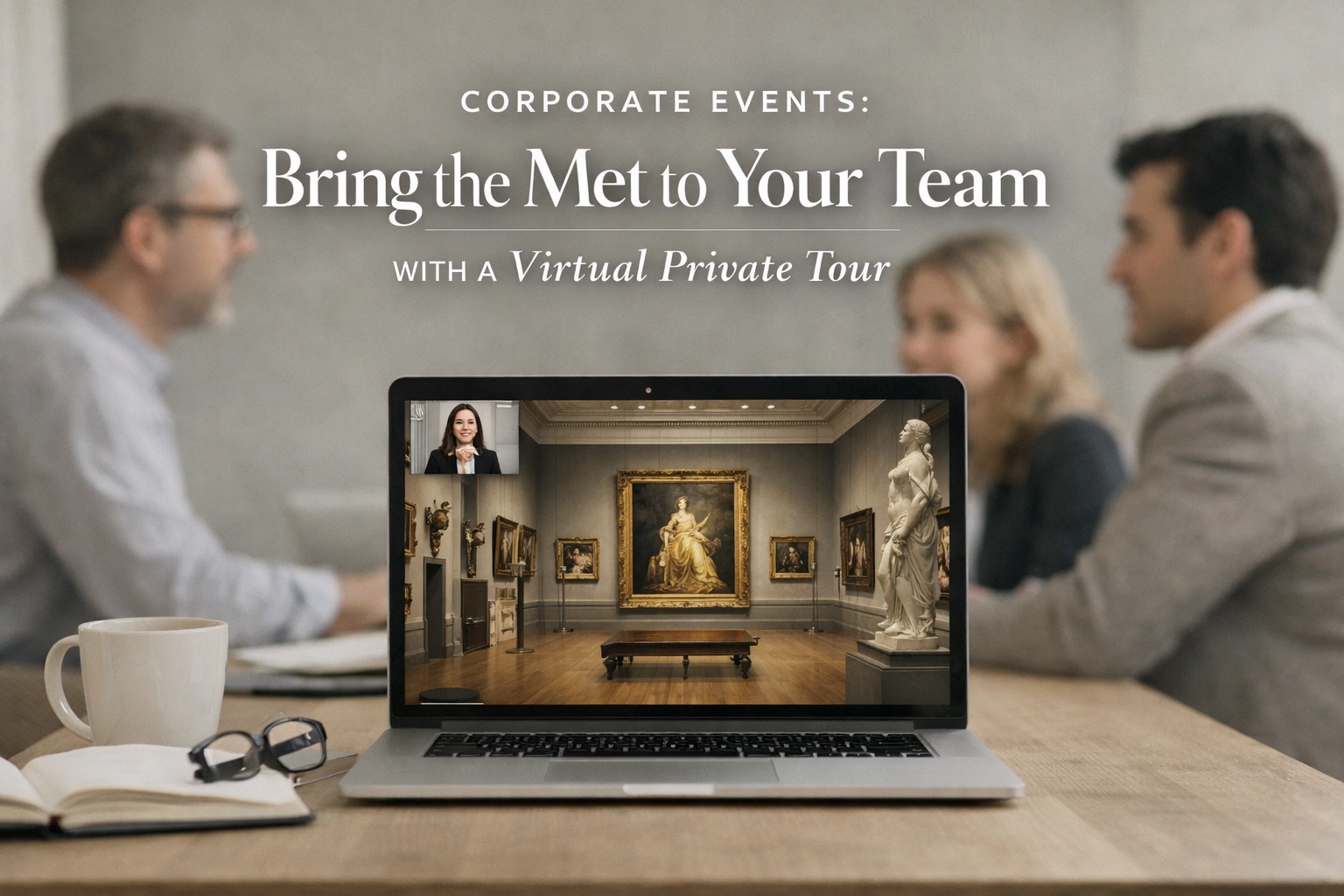
Let’s be honest: the world does not need another "Virtual Happy Hour." We’ve all been there: staring at a grid of faces, nursing a lukewarm drink, and trying to remember whose turn it is to answer a trivia question about 90s sitcoms. If you’re looking to actually engage a high-performing team, the standard "remote social" isn't just tired; it’s a missed opportunity. What if, instead of another awkward Zoom, you could transport your entire global team into the heart of the Metropolitan Museum of Art? What if you could offer them the keys to one of the world’s most exclusive treasure fixes, led not by a generic host, but by the very curators and museum staff who walk these halls every day? At Private Museum Tours and Arts Advisory , we believe that Virtual Team Building NYC should feel just as high-end and exclusive as a private gala. We aren't just showing slides; we’re bringing the soul of the museum to your screen. The Myth of the "Standard" Virtual Met Museum Tour Most people hear "Virtual Met Museum Tour" and imagine a clunky, Google Street View-style experience where you click through blurry galleries and accidentally "walk" into a wall. That is exactly what we don't do. The biggest regret I hear from corporate planners is that they waited too long to try something sophisticated because they thought "virtual" meant "low-energy." I can tell you from experience: when you have a world-class art historian narrating the scandalous history behind a Royal Egyptian tomb or the hidden political messages in a 19th-century American masterpiece, the "screen fatigue" disappears. We position our Remote Corporate Art Tours as a transformative experience. It’s an investment in your team’s cultural capital. By stepping behind the velvet rope: even digitally: your team isn't just "attending an event"; they are participating in a curated VIP moment that stays with them long after they log off. Professional art historian leading a virtual museum tour for corporate team building NYC. Why a Professional Curator is Your Secret Weapon You wouldn't hire a hobbyist to run your quarterly financial review, so why hire a "generalist" tour guide for your team’s cultural development? The difference between a "slideshow" and a Virtual Private Tour lies in the expertise of the guide. Our team consists of museum staff and art historians who live and breathe these galleries. We know the Met Museum private tour insider checklist by heart, and we bring that same "insider" energy to the digital space. We Answer the "Ungoogleable" Questions: A pre-recorded video can't tell you why a specific sculpture was moved last Tuesday or what the staff really thinks about the latest controversial acquisition. Our guides can. Tactile Storytelling: We use high-resolution imagery and curated narratives to zoom in closer than the human eye can see in person. We show you the brushstrokes on a Rembrandt that you’d miss if you were jostling with crowds in the physical gallery. Human Connection: We facilitate real dialogue. This is a conversation, not a lecture. We encourage your team to debate, question, and find personal connections to the art. Tailoring the Experience to Your Corporate Culture No two teams are the same. A legal firm in London has different interests than a tech startup in Silicon Valley. That’s why our corporate museum tours are never "one size fits all." When you book with us, we don't just send a link. We consult with you to find the right "vibe." Are you looking for a fast-paced, high-energy tour of the "Greatest Hits"? Or perhaps a deep dive into the history of the Met Gala and the intersection of fashion and art? Imagine your team exploring the Temple of Dendur from their home offices, while a guide explains how this massive monument was gifted to the U.S. and transported stone-by-stone across the ocean. It’s a lesson in logistics, diplomacy, and vision: topics that resonate deeply with corporate leaders. Digital tablet showing ancient Met Museum art during a remote corporate art tour. Bridging the Gap for Hybrid Teams The biggest challenge for the modern workforce is the hybrid split. How do you make the person in the New York office feel just as valued as the remote hire in Austin or the consultant in Singapore? A Virtual Met Museum Tour is the ultimate equalizer. Everyone has the same "front-row seat." There is no back of the room; there is no struggle to hear the guide over the museum’s ambient noise. In fact, many of our clients find that virtual tours allow for more intimacy than physical ones. While we love the feeling of an empty Met Museum , a virtual tour provides a different kind of quiet exclusivity. You can explore the Frick Collection or the Met’s secret corners without ever worrying about a 9:00 AM commute or museum closing times. The ROI of High-End Culture Let’s talk about the bottom line. Why should a company invest in a high-end cultural tour? Retention through Recognition: High-performing employees want to work for companies that value their intelligence. Providing a sophisticated, curated art experience says, "We value you as a whole person, not just a producer." Creative Spark: Exposure to art has been proven to boost lateral thinking and problem-solving skills. Seeing how a 17th-century painter solved a lighting problem can actually help a developer think differently about a coding challenge. Stress Reduction: Art is a powerful tool for mindfulness. Our tours offer a "Medieval Escape" or a moment of zen in the Asian Art wing that acts as a mental reset for a stressed workforce. If you’re comparing us to Art Smart or other general tour providers, notice the difference in depth. We aren't just showing you "what" the art is; we’re explaining "why" it matters to you and your team right now. We leverage our extensive knowledge of NYC museums to provide a context that others simply can't match. An empty neoclassical museum gallery representing private VIP access for NYC art tours. How to Book Your VIP Virtual Experience Ready to step behind the velvet rope? The process is as seamless as the tour itself. We handle all the technical logistics, ensuring that your team can join via your preferred platform (Zoom, Teams, Webex) with zero friction. Whether you have a small executive board of 10 or a global division of 500, we scale the experience to ensure every single person feels like they are on a private tour with the CEO. The Steps are Simple: Inquiry: Reach out via our website and tell us about your team and your goals. Curation: We’ll suggest a theme: from "Power and Propaganda" to "The Art of Innovation." The Event: Your team logs in and is immediately greeted by a friendly, expert guide ready to take them on a journey through 5,000 years of human history. Don't waste your time with another "unmuted" disaster of a meeting. Give your team something they will actually talk about at dinner tonight. Give them the Met. Ready to elevate your next corporate event? Contact us today to schedule your custom virtual tour. Takeaway Questions for the Team Leader: When was the last time your team shared a moment of genuine awe together? Does your current team-building strategy reflect the high-end brand you’ve built? What could your team learn from the masters of history about resilience and creativity?
- 7 Things You Didn't Know Were at the Met: The Ultimate Insider Checklist (for a Met Museum Private Tour)
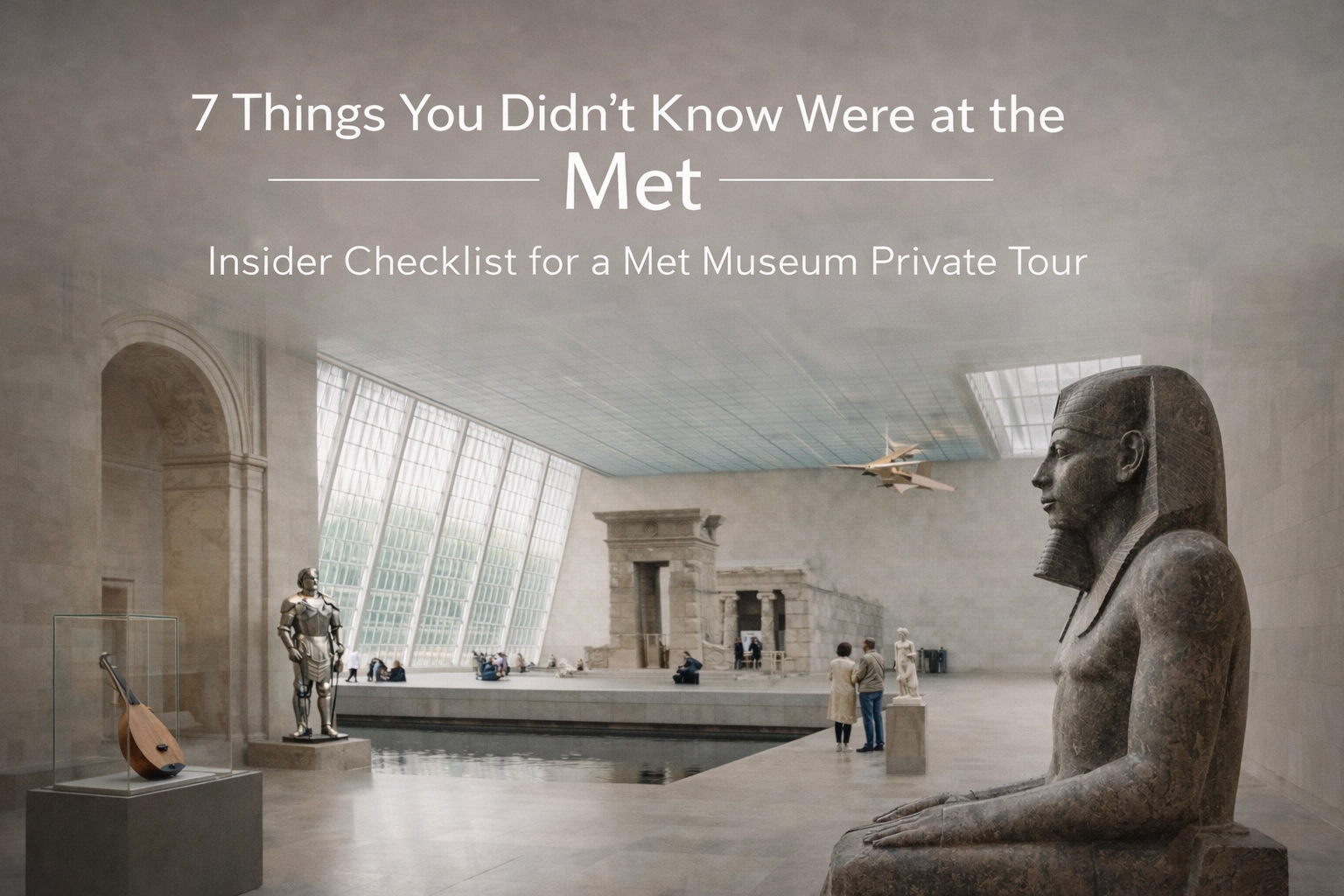
The photograph features a wide-angle view of the Sackler Wing at the Metropolitan Museum of Art, famously home to the Temple of Dendur . The composition uses a large Egyptian statue in the foreground to create a sense of depth, leading the eye toward the ancient sandstone temple reflected in a tranquil indoor pool. Here's the truth most people don't want to hear: You're probably doing the Met wrong. Everyone rushes to the Egyptian Wing, snaps a photo at the Temple of Dendur, and calls it a day. Maybe they swing by the European paintings if there's time. But they're missing entire rooms , actual historical spaces transported brick-by-brick from across the world, that sit quietly waiting while tourists exhaust themselves in the crowded galleries. I can tell you from years of running expert-led guided museum tours NYC visitors ask for when they want the “real” Met: the Met's best-kept secrets aren't secret because they're hidden. They're overlooked because nobody tells you where to look—or how to get there without doubling back three times. That’s why a met museum private tour changes everything. With personal private tours (or group private tours for families and friends), you get a curator-level game plan: what to skip, what to prioritize, and how to actually find the rooms that most people never realize are here. Let's fix that. Met Museum Private Tour: 1. The Astor Chinese Garden Court: Your Indoor Zen Escape Tucked away in the Asian Art galleries, this full-scale Ming Dynasty-style courtyard garden stops people in their tracks. And I mean literally, the shift from museum corridor to this serene space is jarring in the best way. Built in the 1980s, the Astor Court recreates the aesthetic of a late Ming Dynasty scholar's garden from Suzhou. We're talking about intricate latticed windows, a reflecting pool, carefully placed rocks, and that distinctive upturned roof architecture. The acoustics change the moment you step inside. The museum noise fades. You hear water. The space is designed around the concept of Yin and Yang , balancing hard elements like the intricate "Taihu" limestone rocks with soft elements like the flowing water and seasonal plantings. Most visitors blow right past it on their way to the Buddhist sculptures. Don't be most visitors. Pro insider tip: Visit on a weekday morning or Fridays after 3 PM. You might have the entire courtyard to yourself, which feels impossibly luxurious in a museum that gets 7 million visitors a year. 2. The Nur al-Din Room (Damascus Room): Step Into 18th-Century Damascus This one always gets audible gasps on our private tours—and for good reason. The Nur al-Din Room (often called the Damascus Room ) is an actual reception room from an 18th-century merchant’s house in Damascus. Every inch of the walls and ceiling is covered in intricately painted wooden panels featuring Arabic calligraphy, geometric patterns, and scenes from Ottoman life. The colors—deep blues, reds, golds—are still vibrant after nearly 300 years. And just to be crystal clear on where to find it: it’s in the Met’s Islamic Art galleries (Gallery 461) , not the American Wing. It belongs to the Department of Islamic Art, and it’s one of those spaces that feels less like “a museum object” and more like stepping into a living room that just happens to be preserved at world-class level. The fountain. The built-in benches. The way light filters through the arched doorway. This is exactly where private tours of the Metropolitan Museum of Art shine: an expert guide (often with museum/curatorial experience) can get you there efficiently, give the backstory that makes the details click, and help you notice what most people walk right past. The room is famous for its "Ajami" technique , a style of relief painting that uses a mixture of gypsum and glue to create 3D textures, which are then gilded with gold or silver and painted in vibrant colors. 3. The Luce Center for American Art: Behind-the-Glass Wonderland Ever wonder what happens to all the stuff museums can't fit in their galleries? The Luce Center has your answer, and it's spectacular. This visible storage area displays over 10,000 objects behind floor-to-ceiling glass cases. We're talking decorative arts, furniture, silver, ceramics, and folk art spanning three centuries of American history. It's organized by type and material rather than chronology, which creates these incredible visual moments where objects from different eras sit side by side. The whole concept turns traditional museum display on its head. You see multiple examples of similar objects—twenty different silver teapots, a wall of duck decoys, an entire section of weathervanes. It's like browsing the Met's attic (if the Met's attic was beautifully curated and climate-controlled). This is also where group private tours get really fun: everyone can “choose a lane” (silver! furniture! Tiffany!) while your expert guide keeps the story cohesive. And on personal private tours , we can slow down and go deep on exactly what you collect, love, or are curious about. What makes it special: The density. In a regular gallery, you might see one exceptional Tiffany lamp. In the Luce Center, you see forty pieces of Tiffany glass and suddenly understand the evolution of the style. This floor is also known to be haunted. 4. The Gubbio Studiolo: A 15th-Century Puzzle Box This tiny room is easy to miss, and that would be a genuine tragedy. The Gubbio Studiolo is an intimate wood-paneled study from the palace of Federico da Montefeltro, Duke of Urbino, dating to somewhere between 1478-1482. But here's what makes it extraordinary: every surface is covered in intarsia , the Renaissance art of inlaid wood creating incredibly detailed images. Look closer. Those aren't paintings. Those "shelves" of books, musical instruments, scientific tools, and even a half-open latticed cupboard revealing more objects inside, they're all created from different colored woods fitted together with mathematical precision. The three-dimensional illusion is so convincing that people reach out to touch it (please don't). This image highlights one of the most mind-bending examples of Renaissance craftsmanship: The Gubbio Studiolo . While it looks like a three-dimensional cabinet filled with a lute, an hourglass, and scientific instruments, it is actually a total optical illusion. Federico commissioned this masterpiece as his private retreat: a space to think, read, and surround himself with symbols of learning and culture. You can practically feel the intellectual ambition embedded in the wood. 5. The Lehman Wing Facade: The Met’s Original Red Brick Hiding in Plain Sight Most people enter the Lehman Collection and focus on the art: understandably, since it includes works by Rembrandt, Botticelli, and El Greco. But turn around before you leave and look at the walls. That exposed section of red brick? That’s part of the Met’s original 1880 building—an architectural “tell” that you’re standing inside a museum that has been expanding (and reinventing itself) for nearly 150 years. When the museum expanded and constructed the modern Lehman Wing in 1975, they deliberately left a section of the historic facade visible inside the new structure. It’s a brilliant decision. You’re seeing layers of time compressed into one space: 1880s brick, 1970s modernist design, and centuries-old European art all coexisting. This is one of my favorite moments on private tours of the Metropolitan Museum of Art because it’s the kind of detail a museum professional notices instinctively—and most visitors never get told to look up and clock it . Nobody tells you to look for it. Now you'll notice it every time. 6. The Vélez Blanco Patio: A Spanish Castle in Manhattan Want to stand in the courtyard of a 16th-century Spanish Renaissance castle? Head to the first floor and find the Vélez Blanco Patio. This two-story marble courtyard comes from the Castillo de Vélez Blanco in Almería, Spain. Built around 1506-1515, it features elaborate carved columns, ornate arcades, and decorative elements blending Gothic, Renaissance, and Mudéjar (Moorish-influenced Spanish) styles. The scale hits you first. Then the details: the delicate carving on every surface, the way light plays across the stone, the sense of grandeur compressed into this unexpected pocket of European architecture. Like many of the Met's period rooms, it was purchased when the original structure fell into disrepair, dismantled, and reconstructed here. Controversial? Maybe. But walking through it gives you a visceral understanding of Spanish Renaissance art and architecture that no painting could match. 7. The Worsham-Rockefeller Dressing Room: Gilded Age Opulence This one's for everyone who's secretly watched The Gilded Age and wondered what those Fifth Avenue mansions really looked like inside. The Worsham-Rockefeller Dressing Room comes from the mansion that once stood at 4 West 54th Street: demolished in 1964, but this spectacular room was saved. Dating to around 1881, it represents the height of American wealth and decorative excess. The woodwork alone is mesmerizing: carved cherry wood, gilded highlights, built-in mirrors, and elaborate architectural details. The ceiling. The paneling. Even the doorway feels like a statement. This wasn't just a place to get dressed: it was a space designed to remind you (and anyone who glimpsed it) of your position in society's upper echelons. It's tucked into the American Wing period rooms, often overlooked by visitors rushing toward the more famous furniture galleries. Their loss. This image showcases the Worsham-Rockefeller Dressing Room , a masterpiece of the "Aesthetic Style" that dominated high-society New York in the late 19th century. Originally located in a townhouse at 4 West 54th Street, it was commissioned by Arabella Worsham before she sold the fully furnished home to John D. Rockefeller. Why These Rooms Matter (Beyond the Cool Factor) Here's what I love about these seven spaces: they're not just about history: they are history. You're not looking at a painting of a Chinese garden or a photograph of a Syrian reception room. You're standing inside actual spaces where people lived, worked, studied, and socialized centuries ago. The Met has transported entire architectural environments across oceans and decades so you can experience them directly. That's not something you get in many museums. And it's definitely not something most visitors realize is even here. Ready to Actually See the Met? Look, you can absolutely wander through on your own with this checklist. These rooms are open during regular museum hours (though it's worth checking the Met's website since some galleries occasionally close for rotation or conservation). But here’s what I’d ask you to consider: how much more would you see—how much deeper would it feel—if your guide wasn’t just “a tour guide,” but an expert-led insider (the kind of museum staff/curatorial brain that knows what’s worth your time and how to navigate the building without wasting half your day)? That’s the difference between a nice visit and a met museum private tour . With our personal private tours for families and group private tours , we design your route around your interests, your pace, and your people—then we bring the context that makes the Met’s “wow” moments land. If you’re specifically searching for guided museum tours NYC travelers rave about (and yes, VIP entry/line-skipping when available), this is exactly what we do. Ready to step behind the velvet rope? Book your Met experience here: Private Museum Tours and Arts Advisory — Metropolitan Museum of Art Private Tours . The Met will still be crowded at the Temple of Dendur. These seven spots? You might have them mostly to yourself. And that, honestly, is how the Met is meant to be experienced.
- Planning a Family Trip? Here Are 10 Things You Should Know About NYC Museum Tours
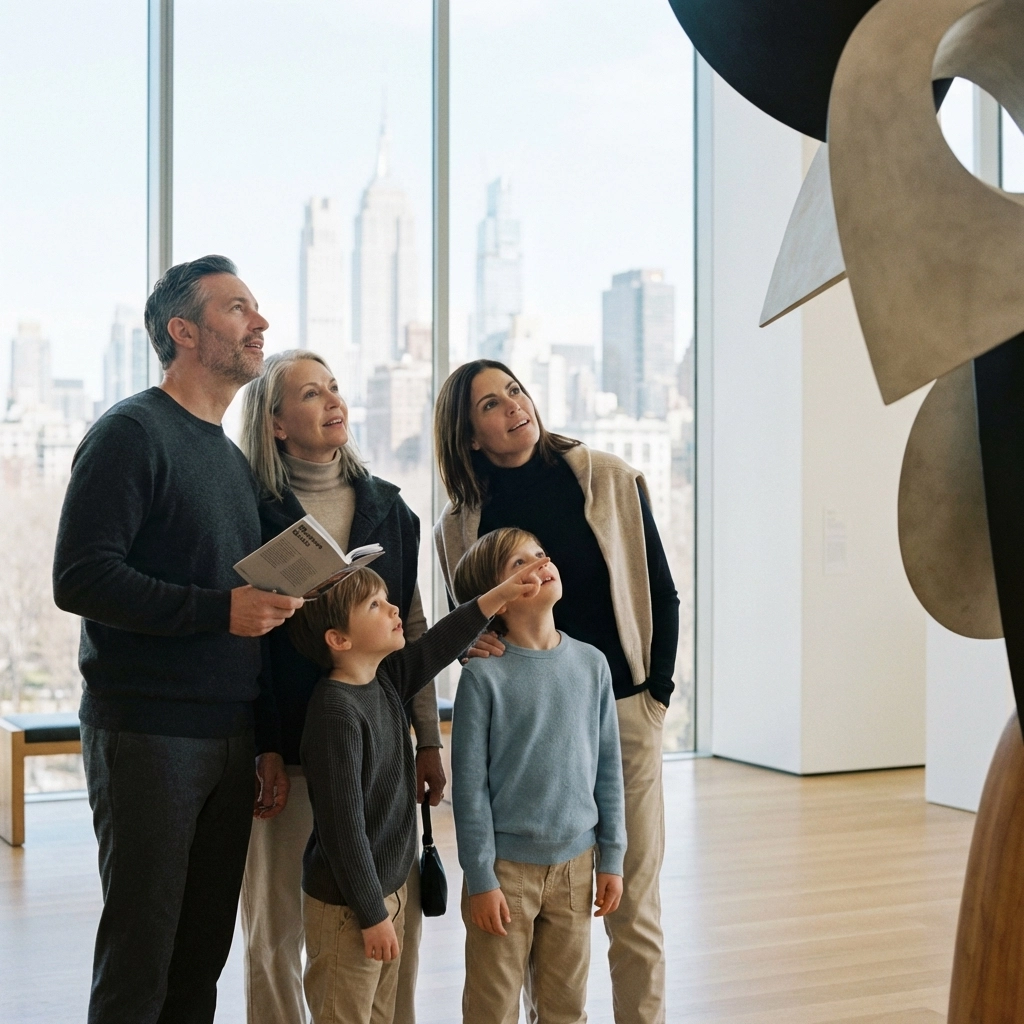
Here's something most parents don't realize until it's too late: taking your kids to NYC museums without a game plan is basically signing up for a meltdown, yours and theirs. I've seen families spend hundreds on flights and hotels, only to battle a long lines at the Met while their 4-year-old has a total breakdown over "boring paintings." But here's the thing, NYC museum tours don't have to be that way . In fact, when done right, they can be the highlight of your entire family trip. After years of designing customized family museum tours in NYC , I can tell you exactly what separates an amazing museum experience from a forgettable (or regrettable) one. Let's dive in. Why You Should Consider NYC Museum Tours for Families 1. Skip-the-Line Access Is Worth Every Penny You know what kills a kid's excitement faster than anything? Standing in a queue for 90 minutes before they even get inside. Most families don't realize that private museum tours in New York come with VIP skip-the-line access . That means while other families are melting down in the sun outside the American Museum of Natural History, you're already inside checking out the T-Rex. Time is your most valuable resource on a family trip. Don't waste it standing still. Don't waste time waiting in line vs skip the line. 2. Not All Museum Tour Guides Are Created Equal Here's where things get interesting. The difference between a standard museum docent and a guide trained specifically for families? It's night and day. Kid-friendly museum tour guides know how to read the room. They can tell when your 6-year-old is about to lose it and pivot to something interactive. They ask questions instead of lecturing. They turn Egyptian mummies into storytelling opportunities, not dusty facts. When you're researching NYC museum tours, ask specifically about guides with experience working with children. It makes all the difference. 3. Customization Is the Secret Weapon Remember how I mentioned that booking private museum tours gives you flexibility? This is where it really shines. Your 10-year-old obsessed with ancient Egypt but your 5-year-old only cares about dinosaurs? No problem. A private guide can design a tour that hits both interests without forcing anyone to slog through exhibits they don't care about. You can discuss your family's preferences before you even arrive at the museum. Try doing that with a general admission ticket and an audio guide. 4. "Night at the Museum" Experiences Actually Exist Kids think museums are boring because they've never experienced them the right way. Imagine walking through the AMNH (American Museum of Natural History) after hours, when the crowds have cleared out and the marble halls echo with stories instead of tourist chatter. Or with theatrical storytelling that brings the exhibits to life, actual Night at the Museum vibes. These VIP experiences aren't just gimmicks. They're designed specifically to engage kids' imaginations in ways that daytime chaos simply can't. Museum tour guide engaging child at Egyptian exhibit in NYC 5. Tactile Learning Beats Lectures Every Time Here's what I tell every parent: kids learn by touching, doing, and experiencing , not by standing behind a velvet rope staring at things they can't interact with. The best New York museum tours for families incorporate hands-on elements. Sketching activities in front of famous paintings. Scavenger hunts through Egyptian galleries. Interactive discussions where kids get to ask "why" about everything they see. Some museums even have designated touch-friendly exhibits where younger children can actually handle replica artifacts. Game changer. 6. Age-Appropriate Storytelling Changes Everything You wouldn't explain Impressionism the same way to a PhD student and a third-grader, right? Professional museum tour guides trained in family education know how to adjust their storytelling based on who's in front of them. For younger kids, it's about narratives and characters. For tweens, it might be about mysteries and discoveries. For teenagers, you can go deeper into historical context and artistic techniques. The same painting can tell a dozen different stories depending on who's listening. The trick is having a guide who knows which story to tell. 7. You Can Actually Visit Multiple Museums in One Day Here's a tip most tourists miss: many museum tickets give you all-day access . That means you can tour the Met in the morning, break for lunch in Central Park, and come back for round two in the afternoon when the kids have recharged. Or better yet, design a day that includes two museums. With a private guide who knows the layouts and can manage timing, you can hit the highlights of the Met, then walk over to the Guggenheim, all without the usual exhaustion. Learn more about how museum tours work in NYC to maximize your time. Empty museum halls during private after-hours NYC museum tour 8. VIP Access Opens Doors (Literally) What if I told you there are entire sections of major museums that most visitors never see? With the right connections and the right tour, families can access special collections, conservation labs, and behind-the-scenes areas that aren't open to the general public. Kids love feeling like insiders. It's the difference between looking at art on a wall and understanding how museums actually work. That kind of exclusive access? You can't get it from a DIY visit. 9. Guides Adapt to Different Learning Styles and Needs Every kid is different. Some are visual learners who need to see connections between artworks. Others process information better through stories and movement. And some children have specific needs, like autism-friendly approaches that account for sensory sensitivities. The best museum tour guides in New York are trained to recognize and adapt to these differences. They can slow down, speed up, or completely pivot their approach based on how your kids are responding. This isn't just about keeping kids entertained, it's about making sure the experience is actually educational in a way that works for your family. 10. The Investment Pays Off in Memories (and Peace of Mind) Let's talk numbers for a second. Private NYC museum tours typically start around $750 for small groups. That might seem steep compared to general admission. But think about what you're actually getting: no waiting in lines, expert storytelling tailored to your kids' ages and interests, flexibility to customize the experience, and, this is huge, a stress-free day where you can actually enjoy the museum instead of managing logistics and meltdowns. Ask any parent who's done both: the difference between a chaotic DIY museum visit and a professionally guided family tour isn't just noticeable. It's transformative. Child sketching in front of painting during interactive NYC museum tour Ready to Make Museums Actually Fun? New York museum tours for families aren't about checking boxes or dragging kids through galleries they couldn't care less about. Done right, they're about sparking curiosity, creating those "wow" moments, and building memories that stick around long after the trip is over. The question isn't whether guided tours are worth it: it's whether you want to spend your NYC family trip stressing over logistics or actually experiencing the incredible cultural treasures this city has to offer. Explore our customized family museum tours designed specifically for kids who think museums are "boring" (spoiler: they change their minds pretty quickly). What museum is at the top of your family's NYC bucket list?
- Private Museum Tours: Gainsborough’s Fashion Exhibition at The Frick
The Fashion of Portraiture and Exclusive Art Tours New York: Private Tours of Gainsborough Exhibition at The Frick Step into the gilded halls of The Frick Collection in New York, and you're instantly transported to an era of elegance, grandeur, and breathtaking artistry. Among the celebrated Old Masters, one artist stands out for his uncanny ability to make fabric dance and personalities shine: Thomas Gainsborough (1727–1788) . While famous for his "curs’d face business" (his affectionate term for portraiture), Gainsborough was a secret fashion revolutionary, whose portraits are not just paintings, but elaborate style statements of the 18th century. 1. The Fashionista's Canvas: More Than Just Clothes Gainsborough didn't just paint what people wore; he painted how they wore it, transforming silk and lace into vibrant expressions of status and movement. His work is a treasure trove for anyone fascinated by historical haute couture. At The Frick, particularly with the special exhibition Gainsborough: The Fashion of Portraiture , you witness how he masterfully intertwined the art of painting with the cutting edge of Georgian-era style. Imagine this: You're looking at a portrait, and the fabric seems to shimmer, almost as if a breeze just caught it. That's Gainsborough's magic. He was renowned for his ability to render the luxurious textures of silk satin, crisp Lustring, and delicate muslin with an almost supernatural touch. These weren't stiff, posed figures; they were living, breathing fashion icons. A stylish person in a modern blue satin gown and a wide-brimmed feathered hat, holding a magnifying glass, stands in an art gallery, closely examining a large Gainsborough-style portrait of a woman in an elaborate blue 18th-century dress. The scene emphasizes the connection between historical fashion in art and contemporary appreciation. 2. The "Vandyke" & The "Gainsborough Hat": Influencing Trends Gainsborough wasn't just a documentarian of fashion; he was an influencer! He often dressed his sitters in elaborate, slightly anachronistic "fancy dress" – a nod to the 17th-century style of Anthony van Dyck. This "Vandyke" revival, featuring pointed lace collars and slashed sleeves, gave his aristocratic subjects a timeless, regal air, connecting them to an older, established nobility. But perhaps his most direct impact on fashion was the creation of the "Gainsborough Hat," also known as the "Picture Hat." These wide-brimmed, feathered confections became an instant sensation, designed to elegantly frame the face and complement the towering, powdered hairstyles of the era. He literally put himself into the fashion lexicon! A person in a modern blue satin outfit and a large black hat with white feathers (a "Gainsborough Hat") stands in a museum, intently examining a portrait of an 18th-century lady also wearing a similar elaborate hat and a blue gown. 3. The Magic of Color: "Gainsborough Blue" and Beyond Gainsborough's use of color was revolutionary. Against the academic rules of his rival Sir Joshua Reynolds, who favored warm central colors, Gainsborough embraced cool tones. His famous "Gainsborough Blue" wasn't just paint; it was light. He achieved its luminous quality by applying incredibly thin, translucent layers (glazes) of blue over a darker underpainting. This technique allowed light to bounce back, creating the irresistible shimmer of high-quality silk satin. Consider The Honorable Frances Duncombe (c. 1777) at the Frick. Her magnificent pink gown isn't just pink; it's a dynamic interplay of salmon, silver, and deep rose. Placed against the stormy greens and greys of the landscape, her dress vibrates off the canvas. This stark contrast makes the fabric appear impossibly clean, expensive, and utterly refined – a visual declaration of her aristocratic status. A person in a modern blue satin gown and a large feathered hat holds a magnifying glass up to a Gainsborough portrait of a woman in a similar blue gown and feathered hat, focusing on the intricate details of the dress and the famous "Gainsborough Blue" color. 4. The Brushwork: Effortless Elegance Through "Scratches" Gainsborough's rival Reynolds famously scoffed at his "odd scratches and marks," but these were precisely the secret to his success. His signature "hatching" – long, sweeping, almost vertical strokes – perfectly captured the way light fractured across stiff silk. His "scumbling" technique, applying dry, thin layers of white, created the frothy, transparent effect of lace and gauze. From a distance, these "scratches" magically coalesce into living, breathing fabric. He even used brushes attached to six-foot sticks to maintain a consistent distance from the canvas, ensuring that the overall impression of the sitter and their opulent attire was captured, rather than getting bogged down in minute details. This sense of "effortless elegance" was his hallmark. The portrait of Mrs. Philip Thicknesse by Thomas Gainsborough (1760). She is shown standing in a silver-grey satin gown with elaborate lace at the sleeves and bodice, against a landscape background with architectural elements. Why Choose a Private Museum Tour for the Frick’s New Exhibition? Gainsborough’s portraits are more than just art; they’re a window into a glittering past, a masterclass in fashion, and a testament to artistic genius. While The Frick Collection offers excellent tours, coordinating specific dates and a truly customized experience can often involve a long wait. Want to dive deeper into Gainsborough's techniques, uncover hidden fashion secrets, and explore the Frick's masterpieces at your own pace? Private Tours of Gainsborough Exhibition at The Frick: Skip the long wait times for standard museum tours. For a custom-tailored experience of the new Gainsborough exhibition , book an exclusive private museum tour with Private Museum Tours and Advisory . We specialize in prompt arrangements for fashionistas and Old Master lovers who demand a deeper, more intimate look at art history.
- A Coloring Book By Kids, For Kids: Museum Coloring Book - Creative Gifts For Kids
****** We, the members of Private Museum Tours, present this book to you made for New York City kids, by New York City kids, drawing inspiration from the abundant museum collections of New York City. Visiting institutions like the Metropolitan Museum of Art and Acquavella Gallery, we were motivated by the beauty and absurdity of these works, pulling specifically from “Picasso: Seven Decades of Drawing” and the modern art gallery of the Met’s permanent collection to create this book, transforming world-class inspiration into creative gifts for kids Through the extensiveness of these collections, we were able to travel the world within the museum. Represented here, you’ll find visual references to multiple cultures including Southeast Asian and African art. We hope you enjoy coloring these pages, drawn and curated by a talented group of six to fourteen years old, and that you’ll be just as inspired as we were to visit a museum near you, to immerse yourself in such beauty and absurdity. Takeaway questions for you: Do you ever save your children's artwork? Or did your parents ever share the masterpieces you created when you were a toddler?
- Superfine: Tailoring Black Style at the Met Gala
Superfine: Highlighting Ownership The Costume Institute’s spring 2025 exhibition ( The Met's Gala: Superfine: Black Style Tailoring) , offers a profound cultural and historical examination of Black style through the lens of dandyism, spanning over three centuries. This exhibition aims to illuminate the rich tapestry of Black identity, showcasing how fashion has played a pivotal role in shaping self-perception and societal interactions within the Atlantic diaspora, particularly in the United States and Europe. Co-curated by Monica Miller, the author of “Slaves to Fashion,” this exhibition draws inspiration from her research and insights, further enriching the narrative surrounding Black dandyism and its historical significance. The Birth of Dandyism Dandyism emerged in the 18th century as a distinct cultural phenomenon, particularly within the Atlantic world. This period was marked by a burgeoning culture of consumption fueled by the slave trade, colonialism, and imperialism. As European powers expanded their empires, they also expanded their access to a vast array of goods, including clothing and accessories that signified wealth, distinction, and taste. Within this context, Black dandyism developed, creatively blending African and European style traditions. Several personal items worn by Frederick Douglass highlight his use of clothing to express his identity and political beliefs. These include a tailcoat, a shirt with a "D" monogram, a top hat, a cane, and sunglasses. A pocket watch, once his first, is also displayed, symbolizing his freedom and control over his own time A Cultural Intersection At its core, dandyism is not merely about fashion; it represents a complex interplay between culture, identity, and social status. Black dandyism, in particular, emerged as a response to the rigid social hierarchies of the time. African and European fashion sensibilities merged to create a unique aesthetic that challenged prevailing notions of race and class. Through sartorial expression, Black individuals could assert their identity and signify their status, often defying the stereotypes imposed upon them. Exploring Superfine: Tailoring Black Style “Superfine: Tailoring Black Style” organizes its rich content into twelve distinct sections, each representing a characteristic that encapsulates the essence of Black dandyism. These sections include Champion, Respectability, Heritage, Beauty, and Cosmopolitanism. Together, they weave a narrative that illustrates how self-presentation serves as a means of distinction and resistance in a society shaped by race, gender, class, and sexuality. Champion: Embracing Identity The “Champion” section of the exhibition showcases how individuals have used their style to champion their identity. This characteristic celebrates those who have fearlessly expressed their unique perspectives through fashion, often in the face of adversity. The garments displayed in this section not only reflect personal style but also serve as symbols of empowerment and resilience. Respectability: A Tool for Acceptance The “Respectability” section delves into how fashion has been utilized as a tool for social acceptance. In a world where racial prejudices often dictated interactions, many Black individuals adopted styles that conformed to mainstream notions of respectability. This strategy allowed them to navigate complex social landscapes while subtly asserting their individuality. Superfine: Highlighting Cool Heritage: Honoring the Past “Heritage” pays homage to the rich cultural history that shapes Black identity. This section emphasizes the significance of traditional garments and accessories that have been passed down through generations. By showcasing these pieces, the exhibition highlights the connection between past and present, illustrating how heritage influences contemporary fashion. Beauty: Redefining Standards The “Beauty” section challenges conventional standards of beauty through the lens of Black dandyism. It explores how Black individuals have redefined beauty norms by embracing their unique features and styles. This characteristic serves as a reminder that beauty is not a monolithic concept; rather, it is diverse and multifaceted, reflecting the complexity of identity. Cosmopolitanism: A Global Perspective The “Cosmopolitanism” section highlights the global influence of Black dandyism. It showcases how individuals have drawn inspiration from various cultures, creating a dynamic fusion of styles. This characteristic emphasizes the interconnectedness of fashion and identity, demonstrating how cultural exchange enriches the narrative of Black style. The Aesthetic and the Strategic: Dandyism as a Form of Resistance At the heart of “Superfine: Tailoring Black Style” is the understanding of dandyism as both an aesthetic and a strategic form of resistance. The exhibition interprets dandyism not merely as a style choice but as a means of navigating societal constraints. In a world that often seeks to define individuals based on race or class, the ability to curate one’s appearance becomes a powerful act of defiance. Fashion as a Medium of Expression Through the presentation of garments, accessories, paintings, photographs, and decorative arts, the exhibition invites visitors to explore the rich narrative of Black dandyism. Each piece tells a story, reflecting the aspirations, struggles, and triumphs of those who have embraced their unique identities through fashion. Innovative Design Elements The exhibition’s impact is further enhanced by its striking set design, created by artist Torkwase Dyson in collaboration with the Met's Design Department and SAT3 Studio. Dyson utilized towering black sculptural "hypershapes" to create "architectural zones" that challenge how visitors experience the fashion on display. This innovative approach encourages viewers to engage with the exhibition in new and thought-provoking ways. Adding to the visual impact, the exhibition features unique mannequin heads designed by sculptor and multimedia artist Tanda Francis. Francis created bespoke heads, some incorporating silhouette panels, intended to evoke themes of ancestry and legacy. One notable mannequin head is inspired by the face of Congolese revolutionary André Grenard Matswa, further emphasizing the rich historical context of the exhibition. Visitor Experience This year, visitors will be pleased to know that no additional QR code is needed for entry; your admission fee includes access to this captivating exhibit. This thoughtful approach ensures that all attendees can fully immerse themselves in the experience without the hassle of extra steps. Conclusion: Celebrating Black Style and Identity “Superfine: Tailoring Black Style” is more than an exhibition; it is a celebration of the cultural and historical significance of Black style. By examining the evolution of dandyism over three centuries, the exhibition invites us to reflect on how fashion has shaped identity and provided a platform for resistance. As we navigate a world that continues to grapple with issues of race, gender, class, and sexuality, the lessons learned from Black dandyism remain profoundly relevant. The exhibition serves as a reminder that self-presentation is not just about aesthetics; it is a powerful mode of distinction and resistance that speaks to the resilience of Black identities. Join us in exploring this remarkable journey through fashion and identity at The Costume Institute’s spring 2025 exhibition, “Superfine: Tailoring Black Style.” #SuperfineStyle #BlackDandyism #CulturalIdentity #FashionHistory #Dandyism #EmpowermentThroughFashion #HeritageAndStyle #CosmopolitanFashion #ArtAndIdentity #FashionAsResistance #TailoringBlackStyle #CulturalCelebration #MonicaMiller #TorkwaseDyson #TandaFrancis #ExhibitionDesign #FashionExhibition #ArtisticExpression #DandyismExhibit #FashionAndIdentity #HistoricalExhibition
- Private Frick Collection Tour
West Gallery As we step into the newly renovated Frick Collection, one of the first things that captivates the eye is the exquisite curtains adorning the windows. These sumptuous textiles not only add an elegant touch to the historic interiors but also play a crucial role in preserving the collection's masterpieces. In addition to the beautifully appointed galleries, the Frick is currently hosting a special exhibition titled "Vermeer's Love Letters" that is not to be missed. Featuring two stunning Vermeer paintings on loan, this is a rare opportunity to see these Dutch Golden Age gems up close. It's located on the first floor near the Oval Room. "The Love Letter" from the Rijksmuseum in Amsterdam and "Woman Writing a Letter with Her Maid" from the National Gallery of Ireland in Dublin. These two loans, along with the Frick's own "Mistress and Maid", are displayed together. The two Vermeer works on display are "The Love Letter" from the Rijksmuseum in Amsterdam and "Woman Writing a Letter with Her Maid" from the National Gallery of Ireland in Dublin. These paintings have been graciously lent to the Frick, allowing visitors a unique chance to admire Vermeer's unparalleled mastery of light and detail. These two loans, along with the Frick's own "Mistress and Maid", are displayed together in this captivating exhibition. Interestingly, the Frick has also obtained special permission to display these Vermeer masterpieces, further enhancing the significance of this exhibition. One of the highlights of the Frick's renovation is the newly accessible second floor, which was previously reserved for staff use only. Although the bedrooms on this floor are small, they now offer visitors an exclusive and intimate experience, allowing them to step into the private spaces of the historic Frick mansion. As you explore the second floor, be sure to visit Mr. Frick's bedroom (aka the Walnut Room), which highlights two of his favorite paintings of ladies. It was in this very room that Mr. Frick passed away in 1919, surrounded by the art he so cherished. Mr. Frick's Bedroom - Aka the Walnut Room Henry Clay Frick made his fortune in the steel industry, partnering with the legendary Andrew Carnegie to build one of the most successful steel companies in the United States. Their partnership and business acumen allowed them to amass significant wealth, which Frick later used to build his renowned art collection and the magnificent Frick mansion. Additionally, the Frick has opened a new cafe on the second floor, named Westmoreland after Henry Clay Frick's private railroad car. He acquired this luxurious Pullman car in 1910 for travel between his homes and pleasure trips. This cozy space can accommodate up to 50 people, providing a perfect spot for visitors to refuel and enjoy the museum's ambiance. Our personal favorite is the West Gallery, known for its stunning green velvet wall coverings and an incredible collection of masterpieces by artists such as Rembrandt, Goya, Velázquez, J.M.W. Turner, and El Greco. We highly recommend spending more time in this captivating space if possible. Don't miss your chance to experience the Private Frick Collection Tour , the exceptional Vermeer exhibition, and all the other treasures the museum has to offer. Plan your visit today with us! Steve Martin offers an immersive introduction to The Frick Collection in New York City. Following a major renovation in spring 2025, the museum invites you to rediscover its unique atmosphere and collections. #FrickCollection #Vermeer #DutchGoldenAge #ArtConservation #MuseumRenovation #ArlynFoundation #VermeerLoveLetters #WestGallery #HenryClayFrick #AndrewCarnegie
- When Objects Dream: Man Ray Returns to The Met!
Man Ray returns to the Met I. Introduction: Step Into the Surrealist Playground Imagine a world, Man Ray returns to the Met - where the mundane revolts. A world where a simple iron sprouts menacing tacks, transforming from a household helper into a symbol of discomfort. A world where the human form is abstracted into elegant shapes by camera-less photography. Welcome to the delightfully twisted mind of Man Ray! The Metropolitan Museum of Art is poised to plunge headfirst into this dreamscape with "Man Ray: When Objects Dream," opening September 14, 2025. This isn't just another art show; it's a pilgrimage into the heart of a visionary. A rebel who dared to paint with light (and tacks!), bent reality to his will, challenged artistic norms, and left an indelible, rayographed mark on modern art. Prepare to have your perceptions delightfully destabilized! II. The Dream Unfolds: What to Expect - Man Ray returns to the Met! The main event? "Man Ray: When Objects Dream" will be taking over Gallery 199 at The Met Fifth Avenue, from September 14, 2025, to February 1, 2026. Clear your schedules; this is essential viewing. Why is it a must-see? This exhibition marks the first major and most comprehensive exploration of Man Ray’s radical experiments across all the artistic disciplines he fearlessly engaged in, with a particular emphasis placed on his revolutionary "rayographs." Decoding "Rayographs": What are these enigmatic creations that lie at the heart of the exhibition? Imagine sidestepping the camera altogether. Man Ray achieved this by placing objects—keys, combs, bits of lace—directly onto light-sensitive paper, creating ghostly, ethereal compositions through pure light and shadow. As Dada poet Tristan Tzara so eloquently put it, they capture the very moments "when objects dream." A Feast for the Eyes: Prepare to be overwhelmed—in the best way possible! With over 160 works, the exhibition promises a deep dive into Man Ray's mind. Anticipate encountering approximately 60 iconic rayographs, alongside rarely seen paintings that reveal his painterly origins, provocative assemblages (yes, that iron with tacks will be there!), prints, drawings, and newly restored avant-garde films that showcase his pioneering work with "cine-rayographs." Iconic Highlights: Keep a sharp eye out for such masterpieces as Violon d'Ingres (that breathtaking photograph of Kiki de Montparnasse, transformed into a violin), Gift (the aforementioned iron, a symbol of surrealist subversion), and the chilling Object to be Destroyed (the ticking metronome with an eye, a meditation on time, loss, and perhaps, the fragility of vision itself). Behind the Scenes: This ambitious exhibition is curated by Stephanie D'Alessandro and Stephen C. Pinson. Significant support comes from the Barrie A. and Deedee Wigmore Foundation, with additional support provided by the fashion house Schiaparelli, a fitting tribute to the remarkable creative friendship between its founder, Elsa Schiaparelli, and Man Ray. III. The Rebel Who Painted with Light (and Tacks): Man Ray's Wild Ride Through Art History From Emmanuel to Man Ray: Let's take a brief look at the man behind the myth. Born Emmanuel Radnitzky in Philadelphia, he was, at his core, a painter. This exhibition acknowledges that initial artistic impulse, the foundation upon which his later, more radical experimentations were built. But destiny, and perhaps a touch of rebellion, had other plans. Dada, Surrealism & Beyond: Man Ray played a pivotal role in the raucous Dada movement in New York alongside Marcel Duchamp, challenging the very definition of art with irreverence and wit. In 1921, he moved to Paris, where he became the only American at the heart of the Surrealist revolution, a group of artists who sought to unlock the power of the unconscious mind. The Accidental Genius: Serendipity often plays a crucial role in artistic innovation. In 1921, a darkroom accident led him to stumble upon the rayograph technique, a discovery that would change the course of photography forever. Beyond Rayographs: Man Ray's genius extended far beyond the rayograph. Explore his other groundbreaking techniques, such as solarization (famously explored in collaboration with his lover and muse, Lee Miller), which added an ethereal, almost dreamlike quality to his photographs. Objects with Attitude: His "readymades" were far more than just found objects. They were philosophical jabs, intended, as he himself stated, "to amuse, annoy, bewilder, mystify and inspire reflection." Consider The Gift and Object to be Destroyed – art that transcends mere aesthetics, forcing us to confront uncomfortable truths about ourselves and the world around us. The Multihyphenate: He seamlessly transitioned between roles as a painter, object-maker, avant-garde filmmaker (pioneering "cine-rayographs"), and even a sought-after high-fashion photographer for Vogue and Schiaparelli . It's worth noting that Man Ray often viewed his commercial work as a necessary evil, a means to fund his "real" artistic pursuits. A pragmatic approach to maintaining his artistic freedom. IV. Beyond the Frame: Man Ray's Enduring Impact & Lingering Questions From Misunderstood to Millions: Man Ray’s reputation has undergone a dramatic transformation over time. Once an acclaimed but sometimes critiqued artist, his work now commands record-breaking prices. Remember Violon d'Ingres selling for a staggering $12.4 million in 2022? A testament to his enduring legacy. Elevating the "Snapshot": He played a crucial role in elevating photography from a mere documentary tool to a respected and experimental art form. He dared to challenge the established order, pushing the boundaries of what photography could be. Pop Culture Penetration: His imagery continues to permeate contemporary aesthetics. From tattoo designs directly inspired by the f-holes in Violon d'Ingres to fashion collections that echo his iconic style, his influence is undeniable. Controversies & Provocations: · "Crimes Against Photography": Man Ray himself playfully described his experimental techniques as literal "crimes against chemistry and photography," highlighting his willingness to break the rules and defy convention. · The Painter's Predicament: Throughout his life, he grappled with an internal debate: was he primarily a painter, or a photographer? Critics sometimes missed the genius of his fluidity across mediums, failing to appreciate the interconnectedness of his artistic endeavors. · Personal Shadows: It is essential to acknowledge the biographical examinations surrounding Man Ray, including his deliberate distancing from his Jewish heritage and criticisms regarding the portrayal of women in some of his works. The Object to be Destroyed , featuring Lee Miller's eye, is often cited within this context, raising questions about agency, representation, and the complex relationship between artist and muse. V. What's Next for the Dreamer? Future Visions The Met Show Leads the Charge: "Man Ray: When Objects Dream" stands as a pivotal moment for rediscovering the full breadth of his genius, solidifying his place as a central figure in 20th-century art. Global Influence: Another major retrospective, "Man Ray. Forms of Light," opening simultaneously in Milan, underscores his ongoing international relevance, demonstrating that his work continues to resonate with audiences worldwide. Inspiring the Next Generation: His experimental spirit continues to fuel contemporary artists, photographers, and major fashion designers (think Yves Saint Laurent, Martin Margiela, and the revitalized Schiaparelli brand of today). His legacy is one of innovation and boundless creativity. A Legacy That Keeps Evolving: Man Ray's work remains a vibrant source of inspiration, challenging us to look beyond the obvious, question our perceptions, and embrace the dreamlike potential that lies within the everyday. VI. Don't Just Dream It, See It! Mark your calendars! "Man Ray: When Objects Dream" promises to be an unforgettable experience. This is a rare chance to immerse yourself in the full breadth of Man Ray's genius and witness the birth of a new artistic vision. What's your favorite Man Ray piece? Are you excited to see his rayographs up close and personal? Share your thoughts and anticipations in the comments below! Let's explore the dreamscape together!
- Celebrate Your Love: Engagement Tours at the Met!
Last week at the Metropolitan Museum, in front of the stunning site-specific installation by Kosovar artist Petrit Halilaj (born 1986, Kostërc, former Yugoslavia), I was moved to tears as I witnessed a young man drop to one knee and propose. The mix of elation and anxiety was palpable as everyone wondered whether his soon-to-be bride would say yes or hesitate. Engagement Tour at the Met As Maria, the Korean bride, I deeply resonate with these emotions. I’ve experienced the whirlwind of love and commitment firsthand, having been married 50 times and proposed to hundreds of strangers. My documentary, which took over nine years to complete and was released in 2013, has transformed into a film about love in America, garnering significant media attention. Many refer to me as the "Woman Who Married Fifty Times" or the "Voice of Unmarried Women." Now available on Amazon Prime for just $2.99! I can’t help but laugh as I share this. Maria the Korean Bride: 50 Weddings/50 Husbands For those unfamiliar with my project, as a first-generation Korean-American artist, I embarked on a unique journey to capture the essence of the American experience. Dressed in traditional Korean wedding attire, I traveled across all fifty states, posing for portraits and playfully proposing to random men, women, and even animals. This endeavor created a poignant visual narrative that explores the intersections of identity, tradition, and the immigrant experience. Maria the Korean bride in Hawaii You might wonder why I took on such an ambitious project. The answer is simple: my father. Our relationship has its challenges, but I know he loves me. The cultural gap between us is vast, and he has always wanted me to marry, believing it would secure my future. Rather than argue during family gatherings, I chose to connect with fellow Americans about family dynamics and fulfill my father's wish for me to marry. Maria the Korean Bride in Alaska I invited diverse participants on this transformative journey, starting in Las Vegas, Nevada—the wedding capital—challenging preconceived notions of American identity. By weaving together personal stories, cultural insights, and striking imagery, my work reflects the richness and complexity of the human experience, inspiring deeper understanding and appreciation for the diverse tapestry that defines the United States. Among my memorable experiences, I married a Samoan Hawaiian mafia member with commitment issues in Hawaii and a fifth-generation cowboy from Wyoming. I even married a museum director from the Wadsworth Atheneum Museum (now deceased) and a woman in Boston, an actress and model, to explore same-sex marriage. For more stories, visit my website at www.mariathekoreanbride.com. I cherish these experiences and maintain connections with many of my participants throughout the country, whom I consider my extended American family. Now - As the founder of Private Museum Tours and Art Advisory based in NYC and a teaching artist at the Metropolitan Museum of Art, I help others engage with art in serene environments. Yes! Engagement Tours are possible at the Met!These spaces are filled with unique artworks and antiquities dating back 5,000 years. I offer access before the museum opens to the public, accompanied by a talented photographer who has witnessed many weddings in his career. The young man's proposal reignited my creative energy and rekindled my love for love and my affection for people and America. Who will be the next to get married? Let us celebrate art and the freedom to marry whoever we choose in the USA! Experience these unique tour experiences with us. #KoreanBride #LoveInAmerica #ArtAndCulture #DocumentaryFilm #MarriageJourney #CulturalDiversity #MetropolitanMuseum #ArtEngagement #IdentityAndTradition #ImmigrantExperience #AmazonPrime #LoveStories #CherishedConnections #CreativeJourney
- The Metropolitan Museum of Art vs. MoMA
Walking in the footsteps of history. The majestic staircase bathed in light, a quiet moment before diving into a world of masterpieces. The Metropolitan Museum of Art vs the Museum of Modern Art (MoMA): Which is Better? New York City boasts some of the most prestigious art institutions in the world, with the Metropolitan Museum of Art (The Met) and the Museum of Modern Art (MoMA) standing out as cultural giants. Founded in 1870, The Met is one of the largest and most comprehensive art museums globally, housing a collection that spans over 5,000 years of art history. From ancient Egyptian artifacts to European masterpieces, The Met offers visitors a unique glimpse into the evolution of global cultural heritage. As highlighted in a Tiqets article, "The Met's catalogue encompasses a collection that takes world history into consideration and does so to an arguably unrivaled degree." In contrast, MoMA focuses on modern and contemporary art, featuring influential works from the late 19th century to the present. While The Met provides a historical perspective, MoMA emphasizes innovation and the evolution of artistic expression, showcasing masterpieces by artists like Vincent van Gogh, Pablo Picasso, and Andy Warhol. This distinction makes both museums essential stops for art enthusiasts, offering complementary experiences that reflect different facets of art history. Visitors can purchase tickets through CityPASS, gaining access to both institutions for a comprehensive exploration of New York's rich artistic landscape. **The Met: A Historical Treasure Trove** The Metropolitan Museum of Art has a rich history that dates back to its founding in 1870 by a group of American citizens, including businessmen and artists. Their mission was to provide access to art for the American public. The museum began in a modest building on Fifth Avenue but quickly outgrew its space due to the rapid expansion of its collection. Today, The Met houses over two million works of art, including ancient Egyptian artifacts, European masterpieces, and American art. Among its highlights is the Temple of Dendur, an ancient Egyptian temple dating back to 10 BC, which is the famous gallery where the annual Met Gala is also held. This iconic exhibit was relocated to New York as part of a UNESCO initiative to preserve historical sites threatened by the Aswan High Dam, showcasing The Met's commitment to global cultural heritage. Visitors can engage with ancient history and explore a broad spectrum of human experiences through art. Over the years, The Met has undergone several expansions and renovations, including the addition of the Met Cloisters in 1938, which focuses on medieval European art. The museum's grand architectural style reflects its historical breadth, symbolizing the rich narratives contained within its walls. The Met's mission has always been to educate and inspire, offering a variety of tours, workshops, and lectures aimed at enhancing visitor understanding of art history. **Accessibility and Inclusivity at The Met** The Met prioritizes accessibility, offering a unique admission policy for New York State residents and students from nearby states, allowing them to pay what they wish. This initiative fosters a love for art and culture among diverse communities, ensuring that everyone has the opportunity to experience the museum's extensive collection. As stated on The Met's official site, "It’s up to you what you pay. Just make sure you bring a valid ID with proof of your residency." **MoMA: A Hub for Modern Artistic Expression** In contrast to The Met's historical breadth, the Museum of Modern Art (MoMA) specializes in modern and contemporary art. MoMA's collection showcases influential works from the late 19th century to the present, making it a premier destination for those interested in contemporary art movements. The museum emphasizes innovation, featuring masterpieces by artists such as Vincent van Gogh, Pablo Picasso, and Andy Warhol. MoMA's focus on modern artistic practices creates a vibrant atmosphere that encourages visitors to engage with contemporary issues and movements. Both museums serve as essential cultural institutions in New York City, offering distinct perspectives on art history. The Met provides a historical context, while MoMA highlights the impact of modern art on society. **Engaging Exhibitions and Programs at The Met** The Metropolitan Museum of Art stands as a beacon of cultural engagement, hosting a variety of educational programs and community initiatives. These include guided tours, workshops, and lectures designed to enhance the visitor experience and deepen their understanding of art history. The Met frequently features temporary exhibitions that showcase specific themes or artists, providing fresh perspectives and insights into the art world. The museum's architectural grandeur enhances the overall experience, with its location on the eastern edge of Central Park offering a scenic backdrop. Visitors are invited to engage with art in a way that is both personal and profound. **Visitor Experience: Navigating Through Art History** Visiting The Met is an enriching experience, allowing art lovers to navigate through over 5,000 years of human creativity. With a diverse collection that includes ancient Egyptian artifacts, European masterpieces, and American art, The Met is a must-visit destination for anyone in New York City. One of the highlights is the Temple of Dendur, which offers visitors a unique glimpse into ancient civilizations. The museum encourages guests to explore areas that interest them most, whether that be Greek and Roman art or modern masterpieces. The Met's admission policy allows New York State residents and students from nearby states to pay what they wish, promoting accessibility and inclusivity. **Cultural Impact and Global Influence of The Met** The Metropolitan Museum of Art profoundly influences both local and global art scenes. Its commitment to accessibility, education, and the preservation of cultural heritage ensures that it remains a pivotal institution for future generations. The architectural styles of The Met and MoMA reflect their missions, with The Met's grand, classical architecture symbolizing its historical breadth and MoMA's modernist design embodying its commitment to contemporary art. **Head-to-Head Comparison: The Met vs. MoMA** Ultimately, choosing between The Met and MoMA depends on your artistic interests. The Met invites you to explore the depths of human history through art, while MoMA challenges you to engage with the innovations of modern artistic practices. Both institutions are essential stops for art lovers in New York City, promising to inspire and educate. **Conclusion: Two Pillars of New York's Art Scene** The art scene in New York City is shaped by the Metropolitan Museum of Art and the Museum of Modern Art. Together, they represent the dual pillars of artistic expression, offering visitors a comprehensive journey through both historical and contemporary art. Whether you are drawn to the historical depth of The Met or the innovative spirit of MoMA, both institutions are must-visit destinations for anyone looking to explore the rich tapestry of human creativity. For more information about visiting The Met, check out their official website at The Metropolitan Museum of Art. Takeaway: Did you know that the Met has its own poster child artwork? Hint: It's in Gallery 825.
- How To Book A Private Museum Tour For A Small Group in New York
Private museum tours in grand European cities like Paris and Rome are often seen as the ultimate cultural luxury. But what if we told you that the same exclusive, enriching opportunities are flourishing right here in New York City? As someone who has dedicated decades to the museum world, I can tell you that the biggest regret I hear—and sometimes share—is not taking full advantage of the bespoke, small-group tours available through museums or private vendors. We tend to think of museum visits as a daytime, crowded affair. Yet, the real magic and the most profound educational experiences often happen when the crowds vanish. This is a chance to not just see art, but to truly learn and create lasting, educational memories for yourself and, crucially, for your children. Yes, there is a price tag, but it's an investment in your family's culture, education, and shared history. Ready to step behind the velvet rope? Let's explore exactly how you can secure this VIP experience. How to book a private museum tour for a small group in New York? Booking a truly exceptional private museum tour in NYC is a straightforward process that begins with finding the right partner. Follow these steps to transform your next museum visit from a general outing into a world-class educational experience. Step 1: Finding and Selecting Your Tour Provider You have two main paths to a private tour: Museum-Direct: Major institutions like The Met, MoMA, and the Whitney often have dedicated "Group Visits" or "Private Tours" departments. Private Art Advisory/Tour Companies (Recommended for Customization): This is where specialized firms shine, as their sole focus is tailoring the experience. Here’s how to vet and select the best fit for your small group: Check Credentials: Look for guides with advanced degrees (M.A. or Ph.D.) in art history, archaeology, or a related field. The quality of the guide is the foundation of a quality learning experience. Focus on Customization: A good private provider should want to know your group's specific interests before you book. Do you love Impressionism? Are the kids obsessed with Egyptian mummies? The tour should be built around you. Read Reviews on Expertise: Look for testimonials that specifically mention the depth of knowledge and the engaging, conversational style of the guide—not just the ability to skip lines. Step 2: Leveraging the Benefits of a Premium Provider Focus on Quality Learning Experiences: These firms emphasize hiring expert art historians who treat the tour as an interactive seminar, not a rote lecture. Their guides engage in real conversations, answer complex questions, and offer context that goes far beyond the placard text. Art Advisory Integration: Some companies offer consulting services, bringing an unparalleled level of market and curatorial insight to the tour, which is invaluable for serious collectors or aspiring art patrons. Small Group Intimacy: They specialize in keeping groups small (often 6 or fewer), ensuring every member can see, hear, and engage personally with the guide and the artwork. Step 3: Discussing Exclusive Off-Hours Access This is the ultimate VIP perk that separates a good tour from a magnificent one. Off-hours tours mean you enter the museum when the doors are closed to the public. Quiet Exclusivity: Imagine standing in the Great Hall of The Met or a major MoMA gallery in near silence, with only your small group and the security staff. This is the opportunity to study the artwork without distraction —no jostling, no noise, just you and the masterpieces. Maximize the Experience: While typically carrying a higher fee, this allows for a level of concentration and reverence that is impossible during public hours. It is the perfect setting for deep, customized learning and for children to absorb the experience in a calm, memorable way. Step 4: Tips for Maximizing Your Private Tour Experience A private tour is an investment, so make sure you get the maximum return: Customize the Tour Based on Your Interests: Do not settle for a standard "highlights" tour unless that is all you want. Prior to booking, provide a list of specific artists, time periods, or even a few "must-see" works. A top-tier guide will craft a narrative that connects these interests. Pre-Brief Your Guide: If traveling with children, share their ages and general interests (e.g., mythology, robots, ancient cultures). A great guide will weave in stories and objects tailored to keep them engaged. Set the Pace: With a private tour, you control the clock. Tell your guide if you want to spend 30 minutes on a single artwork or quickly breeze through a wing. Be Ready to Ask Questions: The biggest benefit is the guide's dedicated attention. Use it! Ask the questions you'd never pose in a crowded public tour—the provenance, the restoration history, or the juicy backstory of the artist. Small group enjoying a private museum tour in New York Booking process and practical tips Once you’ve selected a provider and planned your tour, follow these steps to finalize your booking: Confirm group size and date : Small groups usually range from 4 to 6 people. Book well in advance, especially for popular museums or peak seasons. Discuss pricing and payment : Private tours often have a flat rate or per-person fee. Clarify what is included, such as entrance fees or gratuities. Review cancellation policies : Understand the terms in case your plans change. Prepare your group : Share any guidelines from the museum, such as dress code or photography rules. Arrive early : For off-hours tours, punctuality is important to make the most of your reserved time. Clear communication with your tour provider helps avoid surprises and ensures a smooth experience. Now that you know how to book a private museum tour for a small group in New York, we look forward to meeting you!



Search Results

EMAIL ADDRESS
LOCATED AT
Tribeca, New York City
Note: All tours will be conducted at your chosen museum locations.