
Frida and Diego: The Last Dream MoMA Private VIP Museum Tours

Updated: Jun 6

Let me be blunt: if you're planning to see Frida and Diego: The Last Dream at MoMA this spring without a strategy, you're setting yourself up for a very expensive mistake. This exhibition, running March 21 through September 12, 2026, isn't just another blockbuster. It's the convergence of art history, opera, theatrical design, and pure cultural obsession. And when Frida Kahlo's name is on the marquee, "crowded" doesn't begin to describe what you'll face.
Here's what most people don't realize: this isn't a typical museum show. The installation itself is designed by Jon Bausor, the set and costume designer behind the Metropolitan Opera's new production of El Último Sueño de Frida y Diego. You're not just looking at paintings on white walls, you're walking into a theatrical experience that bridges MoMA's galleries with Lincoln Center's stage.
Which means the usual "show up, buy a ticket, wander around" approach? It's going to leave you frustrated, confused, and wondering why you just paid $30 to jostle through a crowd while missing the entire point.
Why This Exhibition Is Different (And Why You Need Different Access)
Most Kahlo exhibitions lean heavily on her biography, the bus accident, the tumultuous marriage, the iconic self-portraits. We get it. But The Last Dream takes a different angle. This exhibition explores the creative dialogue between Frida and Diego Rivera through five Kahlo paintings, a drawing, and over a dozen Rivera works, all presented within Bausor's immersive installation.
The same designer created both the opera's visual world and this exhibition's environment. That's not a coincidence, it's a deliberate artistic conversation between two mediums, two lovers, and two centuries of Mexican cultural identity.
Here's the problem: unless someone explains how these elements connect, you're essentially reading half the story. The paintings are stunning, yes. But the installation is telling you something about memory, performance, and the way we mythologize artists after they're gone. Miss that layer, and you've just paid to see pretty pictures.
This is exactly why a MoMA private tour with actual museum staff or curators isn't a luxury, it's the only way to actually see this show; "Frida and Diego: The Last Dream."
The Crowd Reality Check
Let's talk about what "Fridamania" actually means in practical terms.
Frida Kahlo is one of the most recognizable artists in the world. Her image is on tote bags, coffee mugs, and countless Instagram feeds. Which is wonderful for her legacy, and terrible for your Saturday afternoon at MoMA.
The museum will be packed. Not "busy", packed. Think: clusters of tour groups blocking key works, overheard conversations drowning out your thoughts, and the constant shuffle of bodies preventing you from standing still long enough to actually absorb anything.
And because this exhibition runs through early September, you can't just "wait for the off-season." Summer tourists will overlap with spring art enthusiasts. There is no quiet window coming. Unless, of course, you skip the public entrance entirely.
The VIP Museum Experience You Didn't Know You Needed

Here's what a private art tour NYC actually looks like for this exhibition:
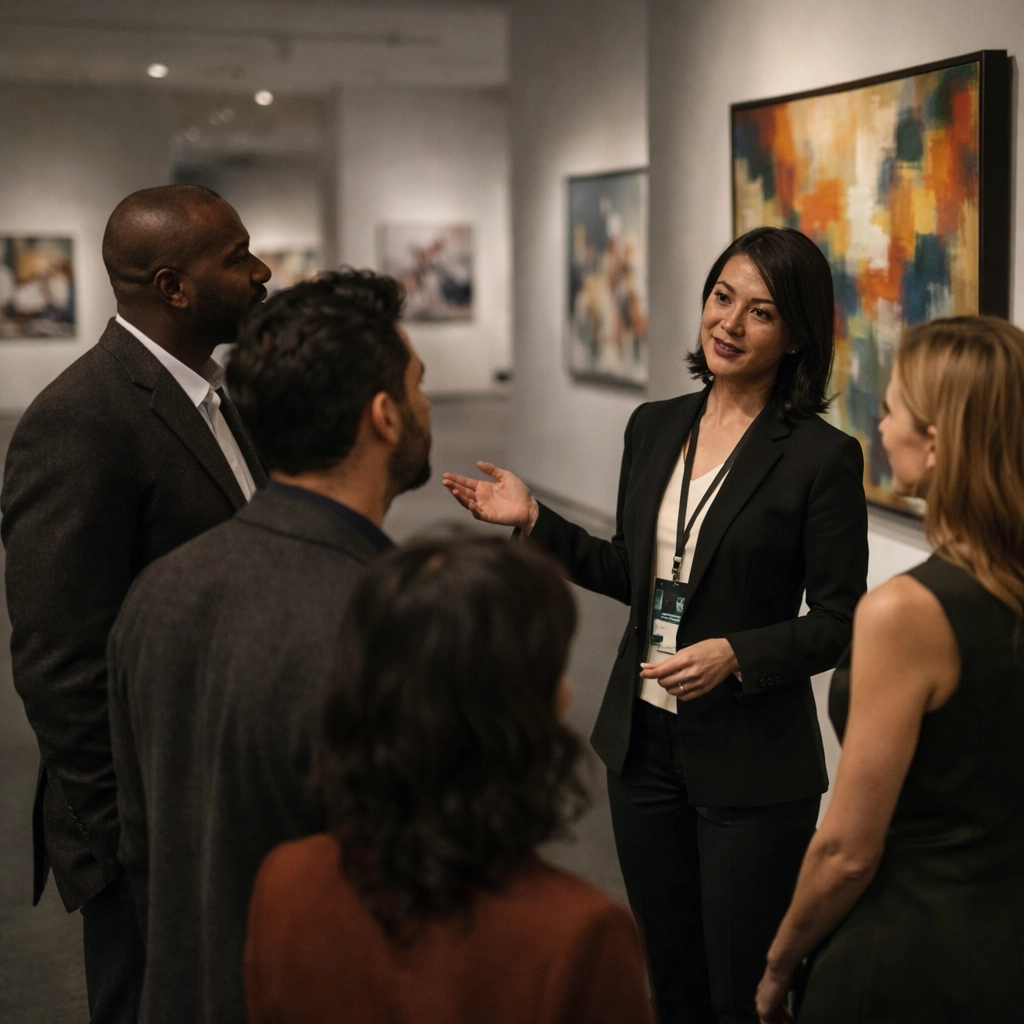
You arrive at MoMA through a different entrance. Not the public scrum on 53rd Street, a quieter, more discrete access point that immediately signals you're having a different experience than everyone else waiting in line.
Your guide isn't someone who read the wall text last night. They're a museum professional, someone who understands how Jon Bausor's theatrical design choices echo specific moments in Kahlo and Rivera's lives, someone who can explain why certain works are positioned in conversation with each other, someone who knows which paintings in this show have never been exhibited together before.
This matters enormously for The Last Dream. Because without context, Bausor's installation can feel confusing. Is it a stage set? A memory palace? A dreamscape? (The answer: yes, all three, and understanding how requires someone who speaks both art history and theatrical design.)
Your guide will walk you through the narrative arc, how the exhibition moves from Kahlo and Rivera's early romance through their artistic partnership, their political commitments, and ultimately to the "last dream" of the title: the way their work and relationship have been reimagined through contemporary eyes.
You'll spend time in front of each work without someone's elbow in your ribs. You'll ask questions. You'll hear stories that don't make it onto the wall labels. And you'll leave actually understanding what you just saw.
The Opera Connection: Perfect Your Timing
Here's an insider move most people will miss: the Metropolitan Opera's production of El Último Sueño de Frida y Diego runs May 14 – June 5, 2026. If you're serious about this cultural moment, that window is your sweet spot for a Frida Kahlo MoMA tour.
Why? Because experiencing both the exhibition and the opera creates a complete artistic dialogue. The same designer (Bausor) created both spaces. The same themes, memory, identity, Mexican modernism, the mythology of artistic genius, run through both works. Seeing the exhibition before or after the opera transforms both experiences from separate events into a single, layered narrative.
A curator can help you understand these connections before you even walk into the opera house. They'll point out visual motifs in the exhibition that will reappear on stage. They'll explain how Bausor uses space differently in a museum versus a theater. They'll prepare you to see the opera not as a separate thing, but as the exhibition's mirror image.
This is the kind of cultural literacy money usually can't buy, but strategic access absolutely can.
Why Museum Staff Guides Matter for This Specific Show

Let's be clear about something: not all guides are created equal, especially for an exhibition this complex. A typical tour guide, even a good one, will know the basics. Birth dates, death dates, famous quotes, the major paintings. They'll tell you Kahlo painted self-portraits because she was her own best subject. They'll mention the bus accident. They'll point out the unibrow.
But a museum professional or curator? They'll explain why Bausor chose specific architectural elements that reference both Kahlo's Casa Azul and Rivera's San Angel studio. They'll discuss how the exhibition's physical layout mirrors the opera's five-act structure. They'll connect individual paintings to specific moments in the opera's libretto.
For a Diego Rivera MoMA tour component, this expertise becomes even more critical. Rivera's murals and paintings operate on multiple registers, personal, political, art-historical. Without someone who understands Mexican modernism, socialist realism, and Rivera's specific place in 20th-century art, you're going to miss why these particular works are in dialogue with Kahlo's pieces.
The theatrical installation isn't window dressing. It's part of the argument the exhibition is making about performance, memory, and how we construct artist mythologies. You need someone who can decode that language.
What You'll Actually See (And Why It Matters)
The exhibition focuses on a tight selection: five Kahlo paintings and a drawing, paired with over a dozen Rivera works. This isn't a retrospective, it's a curated conversation.
Each painting has been chosen to illuminate a specific aspect of their relationship or artistic practice. The small number of works means you can actually spend meaningful time with each piece, rather than racing through a hundred paintings to say you "saw everything."
Within Bausor's installation, these works become something more than static objects. The environment shifts around them, lighting, architectural elements, spatial relationships all designed to evoke memory, theater, and the constructed nature of the Frida-and-Diego legend we've inherited.
This is where having a guide who understands both the art and the installation design becomes essential. They'll help you see how the experience has been choreographed, and why certain choices create specific emotional or intellectual responses.
Your Strategy for Spring 2026
Here's how to approach this exhibition if you're serious about actually experiencing it rather than just checking it off a list:
Book a private tour well in advance. This show will be appointment viewing for the global art world, and Private Museum Tours and Arts Advisory books up quickly for major exhibitions.
Time your visit around the opera dates (May 14 – June 5) if possible. Experiencing both within the same week creates an extraordinary cultural moment.
Plan for 90 minutes minimum in the exhibition. This isn't a show you can rush. The installation demands contemplation, and the paintings deserve real attention.
Ask questions. This is your tour, use your guide's expertise to explore whatever interests you most, whether that's biographical details, technical painting methods, or the broader context of Mexican modernism.
The Bottom Line
The Last Dream will be the defining art exhibition of spring 2026 in New York. It's ambitious, complex, and unlike anything you've seen before, which is exactly why walking in cold is such a waste.
A VIP museum experience NYC isn't about avoiding lines (though yes, that's nice). It's about having access to expertise that transforms what you see. It's about understanding the theatrical installation, the opera connection, and the curatorial choices that make this show special.
Fridamania is real. The crowds will be intense. But with the right strategy: and the right guide: you'll walk out understanding not just what you saw, but why it mattered.
Ready to experience MoMA's spring blockbuster the way it was meant to be seen? Let's make it happen.


Comments